
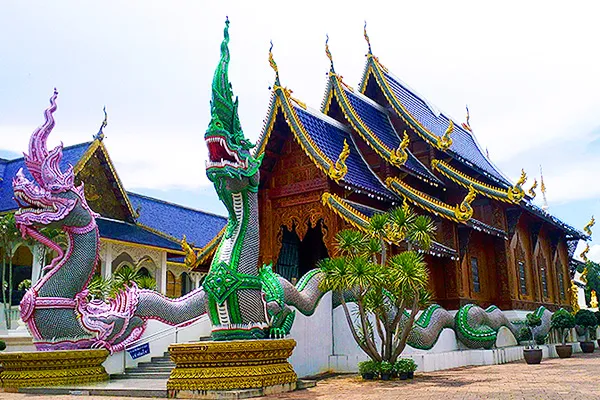

Overview: Embark on a memorable journey through Northern Thailand, beginning in Chiang Rai and ending in Chiang Mai. This 10-day, 9-night itinerary blends cultural discovery, natural beauty, and authentic encounters with local traditions. Start in Chiang Rai with visits to Doi Tung Palace and the Mae Fah Luang Garden, Mae Sai—the northernmost town of Thailand, and the legendary Golden Triangle. Cruise along the Mekong River, admire the grandeur of Wat Huay Pla Kang Temple, and explore the tea plantations of Doi Mae Salong. A stop at an Akha hill tribe village offers insight into their unique way of life. Travel through Chai Prakan and Mae Taeng to discover Hinoki Land, a Japanese-inspired cultural park, the magnificent Wat Ban Den Temple, the refreshing Mork Fah Waterfall, and the soothing Pong Dueat Hot Spring. In Pai, enjoy the lively Walking Street, panoramic views from Yun Lai Viewpoint, the hilltop Wat Phra That Mae Yen Temple, the historic Memorial Bridge, dramatic Pai Canyon, and the charming Khokuso Bamboo Bridge. Continue to Pang Mapha for breathtaking views at Doi Kiew Lom, the mystical Tham Lod Cave with its ancient relics, and a visit to the Lahu hill tribe village. In Mae Hong Son, explore the serene Wat Chong Kham and Wat Chong Klang temples, cross the Su Tong Pae Bamboo Bridge, and experience the tranquil beauty of Ban Ruam Thai (Pang Oung) and Ban Rak Thai village, known for its tea culture and misty lakes. Conclude your adventure in Chiang Mai with highlights such as Doi Inthanon National Park, the sacred Wat Phra Singh and Wat Chedi Luang temples, the iconic Wat Phra That Doi Suthep overlooking the city, and the Hmong Doi Pui Village, where traditions and mountain scenery combine to create lasting memories. This carefully curated tour offers a harmonious blend of temples, ethnic villages, natural wonders, and cultural encounters—an unforgettable exploration of Northern Thailand’s spirit and charm.
● 2 Persons 59,800 THB
● 3 Persons 49,950 THB
● 4 Persons 39,450 THB
● 5 Persons up 37,700 THB
● Price per person / In Thai baht / Private tour
● Tour Difficulty Levels / Easy / Moderate / Challenging
● English Speaking Guide
● Travel Accident insurance
● Admission fees as tour mentioned
● Tour and transfer as private air-con vehicle
● Meals as mentioned in the program (9 Breakfasts / 8 Lunches)
● Accommodations as mentioned based on twin sharing (9 Nights)
● For groups with an odd number of guests, one traveler will be accommodated in a single room at no additional cost.
● Air Fare
● Personal expenses
● Meals are not mentioned in the program
● Chiang Rai: Nak Nakara Hotel or similar
● Ban Tha Ton: Maekok River Village Resort or similar
● Pai: Yoma Hotel or similar
● Mae Hong Son: The Imperial Mae Hong Son Resort or similar
● Chiang Mai: Duangtawan Hotel Chiang Mai or similar
Accommodation Included Throughout Your Journey:
Please note that this tour package thoughtfully includes accommodation for every night of your journey, starting from the very first day until the final evening. Guests can enjoy the convenience of having all lodging arrangements fully taken care of, ensuring a seamless travel experience without the need to worry about additional bookings. Each stay is selected to provide comfort and ease, allowing you to focus entirely on enjoying the destinations, activities, and cultural encounters along the way. By covering all nights’ accommodation, we aim to give you peace of mind and the assurance that your trip will be both well-organized and worry-free.
Private Tour:
This exclusive private tour is designed especially for you and your companions, ensuring that no other travelers will join your group. With complete privacy and comfort, you are free to set your own departure time, travel at a pace that suits you best, and immerse yourself in the attractions that truly inspire you. Whether you wish to linger longer at a favorite site, take photographs without feeling hurried, or simply enjoy a leisurely meal, the choice is entirely yours. Your journey will be tailored to your preferences, allowing you to savor each moment without the pressure of a fixed schedule. A private tour offers not only flexibility but also a more personal and memorable experience. It is the perfect way to discover new destinations in comfort, while enjoying the freedom to create lasting memories with those who matter most to you.
Dinner Not Included:
Our thoughtfully crafted tour packages include both breakfast and lunch, ensuring that your essential daytime meals are fully taken care of throughout the journey. Dinner, however, is purposefully left out of the package. We believe that the evenings are a wonderful time for personal exploration, and we want to give you the freedom to enjoy each destination in your own way. By arranging your own dinner plans, you will have the opportunity to wander through the local streets, soak in the unique atmosphere, and experience the vibrant culture that comes alive after sunset. Whether you choose to sample a variety of traditional dishes, seek out hidden culinary gems, or simply enjoy your favorite meals at a relaxed pace, the choice is entirely yours. This flexibility allows you to connect more deeply with the local lifestyle and create memorable dining experiences in every city where you stay overnight.
No Hidden Costs:
Aside from personal expenses and dinner, you will not incur any additional costs. We are committed to providing complete transparency and ensuring that the prices and services listed on our website or in the quotation letter are the final and all-inclusive prices for our valued customers. You can rest assured that there will be no hidden or extra charges added to the quoted price. Our goal is to offer a seamless and hassle-free booking experience, and we understand the importance of providing accurate and upfront pricing to our customers. We take pride in our integrity and customer-centric approach, and we want you to feel confident and assured when booking with us. Should you have any questions or concerns about the pricing or services offered, our dedicated team is always available to address any queries and provide you with the necessary information.
Tour Guide and Driver:
Many travelers often ask whether the driver and the tour guide are the same person. Please be assured that these are two separate roles, each with distinct responsibilities. Our drivers are dedicated solely to operating the vehicle safely, maintaining its condition and cleanliness, and offering general assistance to travelers when needed. They ensure that every journey is smooth, comfortable, and safe. Our tour guides, on the other hand, are responsible for accompanying travelers to the various attractions listed in the itinerary. They provide detailed explanations about each destination, share cultural and historical insights, and answer any questions you may have along the way. With their knowledge and experience, our guides aim to make your trip enjoyable, informative, and memorable. We place great importance on your safety, comfort, and overall travel experience.
Customizable Itinerary:
Although each tour itinerary we offer has been carefully designed to include major attractions and well-paced daily activities, we fully understand that every traveler has unique interests and preferences. To ensure your experience matches your expectations, we allow you to personalize the itinerary according to your own needs. You are welcome to let us know if there are any attractions you would prefer to skip, additional places you wish to visit, or special requirements you would like us to consider. Once we receive your requests, our team will review them and assess their feasibility. If the changes can be accommodated, we will create a customized itinerary tailored specifically to your preferences and send it to you for review. In the event that certain modifications are not possible due to time constraints, distance, or other limitations, we will clearly explain the reasons and provide alternative suggestions whenever available. Our goal is to help you craft a trip that is enjoyable, flexible, and perfectly suited to your travel style.
Customizable Accommodation:
While all the tour packages showcased on our website encompass accommodation, we understand that you may have preferences for different hotels. Should you desire to lodge at a hotel distinct from the ones featured in the tour package, kindly share with us the chosen tour package and specify the hotel name for each city, your preferred room type, the quantity of rooms required, and any additional specifications you may have. Upon receiving your particulars, we will proceed to assess the availability of the requested hotel rooms and ascertain the feasibility of accommodating any other specific requirements you might have. It is important to note that modifications such as changing hotels, adjusting the number of rooms, or introducing other requisites could lead to a revision in the tour package price. This adjustment would be contingent upon the pricing of the selected rooms and additional services at the chosen hotel. Rest assured, prior to confirming any hotel reservations or additional services, we will promptly communicate to you any changes in the tour package price resulting from your requests. This transparent approach ensures that you are well-informed and enables you to make an informed decision before finalizing any adjustments to your booking.
Tours Without Accommodation:
Alternatively, if you would prefer to make use of only our tour services—comprising comfortable transportation to a variety of attractions, the guidance of our knowledgeable and friendly tour leaders, inclusive lunches, and admission fees to all scheduled sites—while choosing not to take advantage of the accommodation included in the standard tour package, you are welcome to arrange your own lodging independently. This option allows you greater flexibility to select accommodation that best suits your personal preferences, budget, or location convenience, while still enjoying the full benefits of our curated tours. This arrangement can be applied to any of the tour packages featured on our website. To move forward, kindly indicate the specific tour package you are interested in, along with any additional requirements or preferences you may have. Once we receive this information, our team will promptly prepare and share with you the detailed pricing for the selected tour package, calculated without the accommodation charges, so that you have a clear understanding of the costs involved.
Travel Accident Insurance Included:
For your comfort, safety, and peace of mind throughout your journey, we provide comprehensive travel accident insurance as an essential part of every tour package. This coverage is designed to reassure all travelers as they explore Thailand, knowing that they are protected should any unexpected incidents occur during their trip. Our insurance policy fully complies with the regulations set forth by the Department of Tourism of Thailand. These regulations require all licensed tour operators and travel agencies to provide travel accident insurance for every customer participating in their tours. This mandatory safeguard helps promote safer travel experiences and ensures that visitors receive proper assistance, care, and support in the event of unforeseen circumstances. Regardless of the size of your group—whether you are traveling solo, with family, or as part of a larger tour—our insurance will automatically cover every participant without exception. This allows you to enjoy your journey with confidence, without the need to arrange additional coverage on your own. Please also note that the travel accident insurance we provide is already included in the tour price. There are no extra charges, hidden fees, or optional add-ons related to this benefit. Our intention is to offer a seamless, transparent, and worry-free experience from start to finish, allowing you to focus entirely on enjoying the beauty, culture, and unique charm that Northern Thailand has to offer. Your well-being is our top priority. We are committed to maintaining the highest standards of safety and service quality, ensuring that you feel supported and cared for every step of the way throughout your journey.
Itinerary
Upon your arrival at Chiang Rai Airport, you will be warmly greeted and assisted with your transfer to the hotel. After checking in, the rest of the day is yours to enjoy at leisure—whether you choose to unwind and settle in or take the opportunity to explore Chiang Rai at your own pace.
Departing from the charming city of Chiang Rai, the journey begins with a scenic drive toward the mountains to explore two of the region’s most celebrated attractions: the Doi Tung Royal Villa and the enchanting Mae Fah Luang Garden. Perched gracefully at an elevation of approximately 1,200 meters above sea level on Doi Tung in Mae Fah Luang District, the Royal Villa stands as a remarkable symbol of architectural harmony and royal vision. Constructed in 1987 as the residence of Princess Srinagarindra—the revered Princess Mother—the villa beautifully blends the warm elegance of a Swiss chalet with the refined simplicity of traditional Lanna design. As you explore the residence more closely, intricate wood carvings adorning the gables, eaves, and window frames reveal the exceptional craftsmanship of northern Thai artisans. The Royal Villa forms an integral part of the Princess Mother’s visionary Doi Tung Development Project, an initiative that transformed once-degraded lands previously affected by deforestation and opium cultivation into thriving, sustainable communities. Through her dedication and compassion, the Princess Mother not only restored the natural environment but also created new opportunities and livelihoods for local hill tribe communities. Complementing the elegance of the Royal Villa is the breathtaking Mae Fah Luang Garden, a meticulously landscaped botanical sanctuary bursting with vibrant colors and delicate fragrances. Carefully designed to showcase seasonal beauty, the garden features a diverse collection of flowering plants and ornamental species arranged in harmonious displays. Throughout the year, its landscape continually transforms—from the gentle pastel blooms of spring to the rich, fiery hues of autumn—offering visitors a serene retreat and a constantly evolving natural spectacle. A visit to these two extraordinary destinations offers far more than picturesque scenery; it provides meaningful insight into an inspiring chapter of Thailand’s history, reflecting royal philanthropy, environmental restoration, and cultural heritage.
Continuing northward, the journey leads to Mae Sai District, home to Mae Sai—the northernmost town of Thailand and a fascinating border gateway to Myanmar. Here, the gentle flow of the Mae Sai River forms a natural boundary between the two countries, creating a landscape that reflects both geographical significance and cultural exchange. A bridge spanning the river connects the two sides, allowing visitors to glimpse daily life across the border and sense the blend of traditions that characterize this frontier town. At the heart of Mae Sai lies its lively border market, a bustling commercial center where Thai and Myanmar traders gather to exchange goods and stories. As you wander through the maze of vibrant market lanes, you will encounter an astonishing variety of products—from handcrafted souvenirs and local textiles to fresh produce, electronic gadgets, and aromatic spices. The atmosphere is lively and colorful, filled with the chatter of merchants, the aroma of street food, and the vibrant display of merchandise. Visitors can try their hand at friendly bargaining, taste local delicacies, and even observe traditional craftsmanship in action, making the market a truly engaging cultural experience that reflects the dynamic spirit of this border community.
The adventure then continues toward one of Southeast Asia’s most historically intriguing locations: the Golden Triangle, situated in Sop Ruak Village within Chiang Saen District. At this remarkable geographical point, the mighty Mekong River forms the natural border between Thailand and Laos, while the smaller Ruak River marks the boundary between Thailand and Myanmar. Once infamous as one of the world’s major centers for opium cultivation and trade, this region earned the name “Golden Triangle,” where opium—often referred to as “black gold”—was historically exchanged and transported across borders. Today, the illicit trade has long since disappeared, replaced by peaceful communities and educational efforts that recount the region’s complex past. Visitors can learn about this fascinating history while admiring the sweeping views where the three countries meet. One of the most striking landmarks here is the magnificent Golden Triangle Buddha, an impressive bronze statue adorned with topaz and majestically seated along the banks of the Mekong River. This serene monument provides a spiritual focal point and a perfect vantage point from which to reflect upon the unique geography and history of the region.
Adding another memorable chapter to the day’s exploration, the journey continues with a relaxing cruise along the legendary Mekong River. As the boat gently glides across the calm waters, travelers are treated to sweeping views of lush green hills, fertile riverbanks, and peaceful riverside villages that line both sides of the river. Originating high on the Tibetan Plateau, the Mekong travels thousands of kilometers through China, Laos, Myanmar, and Thailand before eventually reaching the sea in Vietnam. Along its remarkable journey, the river serves as a vital lifeline, sustaining countless communities and supporting cultural exchange, agriculture, and trade. During the cruise, you may observe fishermen skillfully casting their nets, farmers tending crops along fertile banks, and children playing joyfully near the water’s edge. These simple yet meaningful scenes beautifully illustrate the deep connection between the river and the people who depend on it for their daily lives. As the day gradually draws to a close and the golden light of sunset reflects across the water, the journey returns to Chiang Rai for a relaxing evening. Here, travelers spend their second night, reflecting on a day filled with natural beauty, cultural discovery, and unforgettable experiences in the far north of Thailand.
After checking out from your hotel in Chiang Rai, the journey continues toward another remarkable attraction that reflects the region’s rich spiritual heritage. Your first destination is the magnificent Wat Huay Pla Kang, a striking spiritual and architectural landmark perched gracefully on a scenic hill overlooking the surrounding countryside. This iconic temple complex is best known for its impressive nine-storey, twelve-sided chedi, a remarkable structure that beautifully blends elements of Chinese and traditional Lanna architecture. As you approach the temple, the intricate craftsmanship becomes immediately apparent—ornate carvings decorate the structure, while its distinctive red roof is dramatically framed by majestic dragon sculptures, symbolizing protection and prosperity. Inside the chedi, visitors can admire the revered image of the Guanyin Bodhisattva, delicately carved from large pieces of fragrant sandalwood, radiating an atmosphere of peace and reverence. The temple grounds are further enhanced by the awe-inspiring 69-meter-tall statue of the Bodhisattva Guanyin, an immense monument roughly equivalent to a 25-storey building. Visitors can ascend within the statue itself to reach an observation deck near the top, where sweeping panoramic views reveal the rolling hills and lush landscapes of northern Thailand. The tranquil surroundings and spectacular vistas make this temple an unforgettable destination for travelers seeking both spiritual reflection and architectural beauty.
From Wat Huay Pla Kang, the journey continues into the enchanting highlands of Doi Mae Salong, a mountain region renowned for its breathtaking scenery and expansive tea plantations. As the road gradually winds upward into the hills, the landscape transforms into a sea of terraced tea fields cascading across the mountainsides, their vibrant green patterns stretching as far as the eye can see. These plantations are not only visually captivating but also represent the agricultural heritage that defines the region. Doi Mae Salong is historically significant as the home of a Chinese Yunnan community—descendants of soldiers who fled to Thailand following the Chinese Communist Revolution. Over time, this resilient community established a thriving settlement devoted primarily to agriculture. Today, the area is celebrated for producing premium-quality tea as well as a variety of fruits and vegetables that are highly valued throughout Thailand and beyond. As you explore the village, traditional Yunnan-style houses, cozy tea shops, and lively local markets reveal glimpses of daily life shaped by this unique cultural heritage. The tranquil mountain atmosphere, combined with the distinct blend of Chinese and Thai influences, often gives visitors the impression of having stepped into a quiet village somewhere in southern China—making Doi Mae Salong an ideal place to relax, explore, and appreciate its distinctive cultural charm.
Continuing deeper into the cultural landscape of northern Thailand, your journey next leads to an authentic village of the Akha people, nestled among the scenic mountains surrounding Chiang Rai. The Akha community has a fascinating history of migration, originally tracing their roots to southern China before gradually moving southward through Myanmar and eventually settling in northern Thailand more than a century ago. Their villages are typically built along mountain ridges, where simple homes constructed from bamboo and thatched roofs blend naturally with the surrounding environment. The Akha people are particularly known for their vibrant traditional attire, which features elaborate silver ornaments, embroidered fabrics, and colorful beads that proudly reflect their cultural identity. Their daily life revolves around subsistence farming, raising livestock, and creating traditional handicrafts such as intricate embroidery and finely crafted silver jewelry. As you wander through the village, you will also have the opportunity to admire the breathtaking natural scenery that envelops these communities—lush forests, rolling hills, and mist-covered mountains that create an atmosphere of peaceful isolation. Combined with the warm hospitality of the villagers, the experience offers a meaningful cultural encounter that leaves a lasting impression on visitors.
The journey then continues to the peaceful community of Ban Huai San Village, located within the tranquil surroundings of Mae Ai District. Here, visitors are introduced to the inspiring Roi Jai Rak Project, a community development initiative established by the Mae Fah Luang Foundation with the goal of improving the quality of life for local hill tribe communities. This thoughtful project focuses on creating sustainable opportunities by promoting employment, agricultural development, and income generation for villagers. A highlight of the visit is the beautiful Suan Roi Jai Rak garden plantation, where vibrant winter flowers bloom alongside carefully cultivated vegetable plots. The gardens present a colorful and well-organized landscape that reflects the dedication and hard work of the local community while demonstrating the principles of sustainable agriculture. Strolling through the plantation, visitors can breathe in the fresh mountain air while admiring rows of flourishing crops and vibrant blossoms that bring life to the valley. Nearby, the lively Kad Luang Roi Jai Rak market provides another engaging experience. Here, villagers proudly display an appealing selection of fresh produce, colorful flowers, aromatic herbs, and handcrafted products. From ripe fruits and fragrant vegetables to beautifully woven textiles and handmade souvenirs, the market offers travelers the opportunity to support the community while taking home a small piece of local culture. The genuine warmth and welcoming smiles of the villagers add a heartfelt dimension to the visit, creating an experience that is both meaningful and memorable.
As the journey continues, you travel onward to the picturesque border settlement of Ban Tha Ton, a charming village located in Chiang Mai Province near the border with Myanmar. Surrounded by majestic mountains and blessed with a refreshingly cool climate throughout the year, Ban Tha Ton offers a peaceful atmosphere filled with natural beauty and cultural diversity. This small yet captivating village invites visitors to explore its unique blend of Thai and Burmese influences, reflected in local traditions, cuisine, and architecture. One of the most prominent landmarks here is the impressive Wat Tha Ton, a temple complex built upon a hillside that overlooks the village and surrounding countryside. The temple’s distinctive design features a remarkable nine-tiered base symbolizing the path toward spiritual enlightenment, crowned by the radiant Phra Borommathat Ratchamangkalachan Samanchan, also widely known as Phra Chedi Kaew. The temple’s elaborate architecture is complemented by breathtaking panoramic views from its elevated terraces. From this vantage point, visitors can gaze across Ban Tha Ton Village, the lush green valleys, and the serene landscape of Mae Ai District stretching toward the distant mountains. As the sun begins to set, soft golden light bathes the temple complex, creating an atmosphere of calm reflection and spiritual serenity.
The day concludes with a relaxing evening and overnight stay in Ban Tha Ton, allowing time to reflect on the rich experiences gathered throughout the journey. From the spiritual grandeur of Wat Huay Pla Kang to the misty tea-covered hills of Doi Mae Salong, from the vibrant traditions of the Akha hill tribe community to the inspiring development initiatives at Ban Huai San Village, and finally to the tranquil beauty of Ban Tha Ton and its hillside temple—each destination reveals a different facet of northern Thailand’s cultural and natural heritage. As night falls over the mountains, the memories of this remarkable journey remain vivid, offering a deeper appreciation for the landscapes, traditions, and resilient communities that define the charm of northern Thailand.
Embark on a captivating journey through the cultural and natural wonders of Chiang Mai Province, a destination where vibrant traditions harmoniously blend with breathtaking mountain landscapes. Your adventure begins at the extraordinary Hinoki Land, a remarkable attraction known as Thailand’s first and only Hinoki wood kingdom. This unique destination offers visitors a fascinating glimpse into the elegance of Japanese art, culture, and architecture while remaining beautifully set within the natural scenery of northern Thailand. Spanning more than 33 acres, Hinoki Land creates an immersive Japanese atmosphere from the very moment you arrive. Passing beneath the impressive red lantern archway, visitors are welcomed by a striking pathway lined with 88 pairs of torii gates, symbolizing the spiritual journey from the ordinary world into a sacred realm. This vivid procession gradually leads to the estate’s centerpiece—the magnificent four-story Hinoki Castle. Constructed entirely from premium Hinoki pine wood, a material treasured for its natural fragrance and durability, the castle reflects refined craftsmanship and timeless design. Its architecture is inspired by the renowned Kinkaku-ji, also known as Kyoto’s Golden Pavilion, echoing a sense of grace and harmony. Inside the castle, intricate wood carvings and tranquil spaces designed for quiet contemplation create an atmosphere of serenity. As you explore the grounds, panoramic views unfold across forested hills, peaceful valleys, and lush mountains, enhancing the sense of tranquility. Hinoki Land is therefore far more than a simple attraction—it is an immersive cultural experience that transports visitors to the spirit of Japan while surrounded by the natural beauty of northern Thailand.
Continuing the journey through the countryside of Chiang Mai Province, the next destination is the serene and spiritually uplifting Wat Ban Den, formally known as Wat Den Sari Sri Muang Kaen. Set gracefully upon a gentle hill amid verdant farmland and rural landscapes, this impressive temple complex stands as one of the finest examples of traditional Lanna architecture in the region. As you wander through the expansive temple grounds, a remarkable collection of architectural masterpieces gradually reveals itself. The elegant ubosot, or ordination hall, is adorned with intricate wood carvings and ornamental details that highlight the artistry of northern Thai craftsmanship. Nearby stands the beautifully designed tripitaka hall, a sacred repository for Buddhist scriptures, alongside the tall and dignified drum tower used for ceremonial purposes. Another revered structure within the complex is the Inthakin pole sanctuary, an important spiritual symbol believed to protect the community. Among the many striking buildings, the golden teak Lanna cubicle structure particularly showcases the refined carpentry traditions of the region, while the temple’s elaborately decorated pagodas gleam brilliantly beneath the sunlight. Each building within the complex appears like a carefully crafted work of art, combining spiritual symbolism with architectural elegance. Visiting Wat Ban Den offers not only an opportunity for quiet reflection but also an appreciation of the cultural heritage and artistic legacy that define northern Thailand.
From cultural wonders, the journey naturally continues toward the region’s pristine natural landscapes with a visit to the enchanting Mok Fa Waterfall, nestled within the lush forests of Doi Suthep-Pui National Park in Mae Taeng District. Although it may not be the tallest waterfall in the region, Mok Fa Waterfall possesses a charm that captivates visitors throughout the year. Fed by clear streams flowing from the dense mountain forest, the waterfall descends gracefully in a single dramatic cascade, plunging from rocky cliffs into a crystal-clear pool below. The surrounding jungle vegetation forms a vibrant green sanctuary, enhancing the natural beauty of the site. At certain times of the day, sunlight refracts through the falling mist to create delicate rainbow reflections, adding a magical touch to the already picturesque scenery. During the cooler months, the landscape becomes even more enchanting as seasonal foliage brings subtle shades of color to the forest backdrop. The soothing sound of rushing water, the refreshing cool mist, and the peaceful forest environment combine to create an ideal retreat for nature lovers, photographers, and travelers seeking a moment of tranquility within northern Thailand’s rich ecosystems.
The journey then leads deeper into nature to discover another fascinating natural phenomenon at the Pong Dueat Hot Springs. Hidden within a lush jungle environment in Mae Taeng District, this geothermal site is known for its dramatic geyser-like eruptions that reveal the powerful forces beneath the earth’s surface. Underground, water temperatures can reach an astonishing 170–200 degrees Celsius, creating columns of rising steam that drift through the forest canopy. By the time the water reaches the surface, the temperature cools slightly to approximately 90–100 degrees Celsius, while the characteristic scent of sulfur fills the air—a natural sign of geothermal activity. Visitors can explore the surrounding environment by following a well-maintained 1.5-kilometer circular nature trail that winds through the forest around the hot spring area. This scenic walkway offers an immersive experience among towering trees, dense foliage, vibrant ferns, and moss-covered rocks. Along the path, informative signboards introduce the native plant species and ecological features of the forest, adding an educational dimension to the walk. The gentle sounds of the jungle combined with the bubbling rhythm of the hot springs create a soothing atmosphere that invites visitors to slow down, reconnect with nature, and fully appreciate the serenity of this unique natural setting.
From Pong Dueat, the journey continues along one of northern Thailand’s most scenic routes toward the charming mountain town of Pai in Mae Hong Son Province. The drive follows a historic road originally constructed during World War II, a winding mountain route that reveals spectacular views of rugged hills, dense forests, and mist-covered valleys. As the road gradually descends toward Pai, the landscape opens into a beautiful valley, signaling the arrival in a town famous for its relaxed atmosphere and artistic spirit. One of the highlights of visiting Pai is experiencing the vibrant Pai Walking Street, a lively evening market that transforms the town’s main street into a colorful hub of activity. Operating from around 5:00 pm until midnight, the walking street is filled with stalls selling handmade crafts, clothing, jewelry, woven baskets, and unique souvenirs created by local artisans. The energy of the market is contagious, with street performers, musicians, and cheerful vendors contributing to the lively atmosphere. As you stroll through the illuminated street, you can also indulge in Pai’s diverse culinary scene. Numerous food stalls and small restaurants offer everything from authentic Thai specialties to international dishes prepared by local and expatriate chefs. Whether sampling traditional street food, enjoying freshly grilled skewers, tasting sweet mango sticky rice, or savoring Western favorites such as homemade pasta, Pai offers a delightful gastronomic adventure for every visitor. As night falls, glowing lights, live music, and friendly conversations fill the air, creating a warm and inviting ambiance that perfectly captures Pai’s distinctive charm. After an evening of exploration, return to your comfortable accommodation in Pai, where the peaceful mountain setting provides the perfect opportunity to relax and recharge for the adventures that await on the following day.
Embark on a captivating journey through the charming mountain town of Pai in Mae Hong Son Province, where unique villages, scenic viewpoints, historical landmarks, and natural wonders combine to create an unforgettable travel experience. The adventure begins with a visit to the traditional Santichon Village, a peaceful settlement established by Yunnan Chinese people who migrated from China many decades ago. Despite the passage of time, Santichon Village has carefully preserved the cultural identity and traditions of its ancestors. The houses, earthen buildings, clay walls, and decorative elements throughout the village still reflect distinctive Yunnan Chinese architectural styles, offering visitors a fascinating glimpse into the community’s enduring heritage. Walking through the village, you may encounter traditional tea houses, small shops selling handmade crafts, and local foods that showcase the culinary influences of Yunnan culture. Just a short distance away lies the spectacular Yun Lai Viewpoint, one of the most scenic vantage points overlooking Pai. From this elevated viewpoint, visitors can admire sweeping panoramic views of Pai town surrounded by lush rice fields and dramatic mountain ranges. During the cool season and the rainy months, the valley is often blanketed by a mesmerizing sea of mist, creating an enchanting atmosphere that feels almost dreamlike. Arriving early in the morning offers the opportunity to witness a breathtaking sunrise, as the first golden rays of sunlight slowly illuminate the valley below—an unforgettable moment that leaves a lasting impression on every traveler.
Continuing the journey, the next destination is the serene hilltop temple of Wat Phra That Mae Yen, located above Mae Yen Village. This sacred temple is both a place of spiritual significance and one of the finest viewpoints overlooking Pai’s picturesque valley. A climb to the summit rewards visitors with a sweeping panorama of the town and its surrounding natural beauty. From this vantage point, endless layers of green hills and valleys unfold in every direction, creating a peaceful and contemplative atmosphere. The temple is particularly magical during the early morning and late afternoon hours. At sunrise, soft golden light gently spreads across the mountains, producing a tranquil and almost mystical scene. Later in the evening, the sky transforms into a beautiful canvas of warm orange, pink, and violet hues as the sun slowly sets behind the hills. Architecturally, the temple also captivates visitors with its traditional Thai design, decorated with fine carvings and elegant details. The focal point of the site is the majestic white statue of the White Buddha of Pai, seated peacefully while gazing across the valley below. This impressive statue symbolizes serenity, compassion, and spiritual protection, adding to the calm and reflective ambiance that surrounds the temple.
The journey then takes a historical turn with a visit to the Memorial Bridge, a poignant reminder of events that took place during World War II. Built by Japanese forces during the war, the bridge once played a crucial role as a transportation route for troops and military supplies moving toward Myanmar. Its strategic purpose during that period gave it historical significance comparable to the famous Bridge over the River Kwai. Although a modern bridge now serves traffic in the area, parts of the original structure remain preserved nearby. The weathered iron beams and aged wooden planks stand quietly as witnesses to a turbulent chapter in regional history. Today, visitors often pause here to reflect on the past while photographing the bridge’s rustic beauty. The contrast between the preserved wartime structure and the modern bridge beside it offers a powerful visual reminder of how history continues to shape the present.
From this historical landmark, the adventure continues toward one of Pai’s most remarkable natural landscapes—Pai Canyon, also locally known as Kong Lan. Formed over many centuries through the natural erosion of soil on elevated terrain, Pai Canyon presents an extraordinary landscape of deep ravines, winding ridges, and narrow earthen pathways. Although the canyon itself covers an area of just over three acres, its dramatic terrain creates the impression of a vast wilderness sculpted by nature. Adventurous visitors can carefully walk along the narrow ridges that connect various viewpoints throughout the canyon. These trails offer both excitement and reward, as each turn reveals stunning panoramic views of nearby villages, cultivated farmland, and forested hills stretching toward the horizon. The surrounding mixed deciduous forest adds vibrant greenery to the scenery, contrasting beautifully with the canyon’s reddish-brown soil formations. Reaching the higher viewpoints provides particularly breathtaking perspectives of the surrounding valley, making Pai Canyon one of the region’s most memorable natural attractions.
The final stop of the day introduces another meaningful cultural landmark known as the Boon Kho Ku So Bridge, often referred to as the Merit Bridge or simply “Khokuso.” This graceful bamboo bridge stretches elegantly across wide rice fields at the edge of Pam Bok Village, framed by a magnificent backdrop of mountains and forest. Built through the faith and cooperation of local villagers, the bridge connects the village with Wat Tham Huai Khai Khiri, allowing monks to travel easily for their morning alms rounds without disturbing the farmers working in the rice fields below. Constructed primarily from bamboo and natural materials, the bridge reflects both simplicity and resilience while symbolizing the strong sense of community within the village. As visitors walk along the gently swaying bamboo pathway, they are surrounded by peaceful rural scenery—lush rice paddies, quiet forests, and distant mountain ridges. The soft rustling of leaves and the gentle movement of the bamboo beneath your feet create a soothing and almost meditative experience. This tranquil setting provides the perfect conclusion to a day filled with cultural discovery, historical reflection, and natural exploration. As evening approaches, return to your accommodation in Pai to rest for the night, reflecting on the unforgettable memories created during this enriching journey through one of northern Thailand’s most charming destinations.
Leaving behind the relaxed charm of Pai, the journey continues deeper into the mountains toward Pang Mapha District, an area renowned for its dramatic landscapes and unspoiled natural beauty. Along the winding mountain road connecting Pai and Pang Mapha lies the breathtaking Doi Kiew Lom Viewpoint, a scenic vantage point that offers some of the most spectacular panoramas in northern Thailand. From this elevated viewpoint, the surrounding mountain ranges unfold in layered silhouettes that stretch endlessly across the horizon. In the early morning hours, the experience becomes particularly magical as the rising sun slowly illuminates the sky, casting soft golden light across the landscape. Below the viewpoint, valleys are often filled with a thick sea of mist that drifts gently between the mountain ridges, creating an enchanting scene that feels almost dreamlike. As the day progresses, the fog gradually lifts to reveal a dramatic vista of rugged peaks and lush forests extending into the distance. Later in the evening, the setting sun transforms the sky into a glowing canvas of warm colors, with golden light reflecting across distant clouds and casting long shadows over the mountains. Throughout the year, the viewpoint is also decorated with vibrant seasonal flowers that add color and charm to the already magnificent scenery. The harmonious blend of mountain views, shifting light, and natural beauty makes Doi Kiew Lom a truly memorable destination for travelers, photographers, and nature enthusiasts alike.
From this panoramic viewpoint, the adventure continues to one of the region’s most fascinating natural and archaeological sites—Tham Lod Cave. Hidden within the forests of Pang Mapha District, this extraordinary cave system has been shaped by nature over countless centuries. Flowing through the heart of the cave is a small underground river known locally as the Lang Stream, which winds its way from one end of the cavern to the other. Inside the cave, visitors encounter an awe-inspiring subterranean landscape filled with towering stalactites hanging from the ceiling and impressive stalagmites rising from the cave floor. These dramatic formations, sculpted slowly over thousands of years by mineral-rich water, create a mysterious and captivating underground environment. Tham Lod Cave is not only a geological wonder but also an important archaeological site. Ancient tools, pottery fragments, and wall paintings discovered within the cave suggest that humans inhabited or used this shelter more than 2,000 years ago, offering valuable insights into the early history of the region. Visitors can explore the cave in a unique way by taking a bamboo raft along the underground river, guided gently through the dimly lit caverns. This peaceful rafting experience allows travelers to observe the cave’s magnificent formations from an entirely different perspective. For those seeking further exploration, short nature trails around the cave provide opportunities to discover the surrounding forest and observe the diverse flora and wildlife that thrive in this pristine environment. The remarkable combination of geological beauty and ancient history makes Tham Lod Cave one of the most unforgettable highlights of the journey.
Continuing onward through the mountains, the next destination introduces visitors to the rich cultural diversity of northern Thailand with a visit to a traditional village of the Lahu people. The Lahu have a long and fascinating history of migration, with origins tracing back to the highlands of Tibet. Over many generations, their communities gradually moved southward through regions of China and Myanmar before eventually settling in the mountainous areas of northern Thailand hundreds of years ago. True to their heritage as mountain dwellers, Lahu villages are typically located on elevated terrain where cooler climates and fertile slopes support agricultural life. The villagers lead a simple yet meaningful lifestyle centered primarily around farming activities such as growing rice and corn, as well as raising livestock for household consumption. Traditionally known for their hunting skills and deep understanding of the forest environment, the Lahu people maintain a strong connection with the natural world around them. Their spiritual beliefs also reflect this connection, as many aspects of their culture involve the worship of ancestral spirits and natural forces believed to protect the community. Ceremonies and rituals are often held to honor these spirits and to maintain harmony between people and nature. Visitors to the village are often warmly welcomed by the local residents, who are known for their friendly and open nature. Walking through the settlement offers a unique opportunity to observe daily village life, learn about traditional customs, and interact with community members who are proud to share their culture with guests from around the world.
As the day’s journey draws to a close, the road continues toward the peaceful provincial capital of Mae Hong Son. Surrounded by misty mountains and tranquil valleys, this charming town is widely known for its relaxed atmosphere and scenic beauty. Spending the night in Mae Hong Son offers the perfect opportunity to unwind after a day filled with exploration. The quiet town, with its cool mountain air and picturesque surroundings, invites visitors to slow down and appreciate the serene rhythms of life in northern Thailand. As evening settles over the mountains, the memories of the day—from the misty views at Doi Kiew Lom to the mysterious depths of Tham Lod Cave and the cultural warmth of the Lahu village—come together to create another unforgettable chapter in this remarkable journey through the highlands of northern Thailand.
Begin another memorable day exploring the spiritual landmarks and scenic beauty of Mae Hong Son, a province renowned for its tranquil temples and breathtaking mountain landscapes. Your journey starts at the revered hilltop sanctuary of Wat Phra That Doi Kong Mu, the most important temple in the province. Perched atop Doi Kong Mu, this sacred site overlooks the entire town and offers some of the most spectacular panoramic views in the region. The temple complex is distinguished by its two elegant white pagodas, each carrying historical significance. The larger chedi was constructed in 1860 by Chong Thong Su, a devoted Shan merchant, while the smaller pagoda was built in 1874 by Phraya Singhanatracha, the first ruler of Mae Hong Son. From this elevated vantage point, visitors can admire sweeping views of the town nestled peacefully within a valley surrounded by layers of misty mountains and lush green forests. The calm atmosphere, gentle mountain breeze, and spiritual aura of the temple create a serene environment that invites reflection and appreciation of the region’s cultural heritage.
Descending from the hill, the journey continues into the heart of the town to visit two neighboring historic temples—Wat Chong Kham and Wat Chong Klang. Situated side by side along the edge of the picturesque Jong Kham Lake, these temples are among the oldest and most culturally significant landmarks in Mae Hong Son. Both temples display distinctive Burmese-style architecture, reflecting the strong Shan and Burmese influences that have shaped the cultural identity of the region for centuries. Within the temple grounds resides the revered Buddha image known as Luang Por To, which holds deep spiritual importance for local devotees. Of the two temples, Wat Chong Klang is particularly famous for its remarkable collection of intricately carved Burmese wooden dolls and delicate glass paintings that illustrate stories from Buddhist history and mythology. These artistic treasures provide valuable insight into the craftsmanship and religious devotion of past generations. Together, the two temples offer visitors a fascinating glimpse into the artistic traditions and spiritual life that continue to flourish in Mae Hong Son.
The journey then continues to one of the province’s most iconic landmarks, the graceful Su Tong Pae Bridge, widely recognized as the longest bamboo bridge in Thailand. Stretching for more than 500 meters across expansive rice fields and irrigation canals, this remarkable structure connects Wat Phu Sama with Kung Mai Sak Village. Constructed entirely from bamboo using traditional techniques, the bridge stands as a beautiful example of local craftsmanship and community cooperation. Walking across the bridge offers sweeping views of the surrounding countryside, where lush rice paddies, small canals, and distant mountain ranges create a peaceful rural panorama. The scenery is especially captivating during the rainy season, when vibrant green rice fields stretch toward the horizon and the mountains are softened by drifting clouds. Farmers working quietly in their fields add a sense of authenticity and rhythm to the landscape, while the gentle sway of the bamboo underfoot and the soft rustling of leaves create a calm and almost meditative atmosphere. Each season reveals a different character of the landscape—from the earthy textures of the dry season to the shimmering golden rice fields beneath bright winter skies—making Su Tong Pae Bridge a timeless and unforgettable destination.
From the tranquil countryside, the route continues toward the scenic border region near Myanmar to explore villages rich in cultural heritage. The first stop is the picturesque Ban Rak Thai village, a settlement established by Yunnanese Chinese who once served in the Kuomintang 93rd Division. Following political upheaval and the rise of communism in southern China, these soldiers and their families migrated to the mountains of northern Thailand and eventually created a thriving community here. Today, Ban Rak Thai retains a strong Chinese cultural identity, visible in its traditional houses, tea shops, and distinctive cuisine. The village sits beside a tranquil lake surrounded by rolling hills and tea plantations that cascade across the mountainsides in neat, symmetrical rows. The peaceful scenery, combined with colorful shrubs and cool mountain air, creates an atmosphere that feels both serene and timeless. Visitors often enjoy sampling authentic Yunnan dishes and tasting locally grown Chinese tea, which has become one of the signature specialties of Mae Hong Son Province.
The day gently concludes with a visit to another enchanting mountain destination—Ban Ruam Thai, more widely known as Pang Ung. This tranquil Shan village is celebrated for its picturesque reservoir, peacefully nestled among rugged mountain ranges and unspoiled natural scenery. Often referred to as the “Switzerland of Thailand,” Pang Ung is renowned for its serene lake framed by tall pine forests and colorful winter flower gardens that bloom beautifully during the cooler months. The pleasantly cool climate throughout the year enhances the charm of this highland retreat, offering a refreshing escape from the tropical heat of the lowlands. The calm surface of the reservoir reflects the surrounding pine trees and distant mountains like a natural mirror, creating a mesmerizing scene that feels almost dreamlike. In the early morning, a soft veil of mist often drifts across the water, adding a magical atmosphere to the landscape. Whether during the lush rainy season when the surrounding greenery flourishes or in winter when the air becomes crisp and the skies clear, Pang Ung maintains a peaceful and captivating beauty that attracts visitors throughout the year. As the day gradually draws to a close, return once again to Mae Hong Son to spend another restful night surrounded by the province’s quiet mountain landscapes. Reflecting on the day’s journey—from sacred temples and historic villages to tranquil lakes and graceful bamboo bridges—you will gain a deeper appreciation for the remarkable natural beauty, cultural richness, and warm hospitality that make Mae Hong Son one of northern Thailand’s most enchanting destinations.
Embark on a memorable journey from Mae Hong Son toward the majestic landscapes of Doi Inthanon National Park, following a winding mountain road that reveals some of northern Thailand’s most spectacular scenery. As the route gradually descends and curves through forested hills and valleys, each turn unveils breathtaking views of mist-draped mountains, lush forests, and distant ridgelines fading into the horizon. Rising to an elevation of 2,565 meters above sea level, Doi Inthanon proudly holds the distinction of being the highest mountain in Thailand. This impressive peak forms part of the vast Thanon Thongchai Range, a mountain system that stretches southward from the mighty Himalayas through regions of Nepal, Bhutan, and Myanmar. Because of its high elevation and diverse terrain, Doi Inthanon National Park boasts a remarkable variety of climates and ecosystems. Within the park, travelers encounter a rich tapestry of forest environments—from dense rainforests and cool pine forests to mixed deciduous woodland thriving at different altitudes. Well-maintained nature trails guide visitors through these ecological wonders, leading past flowing streams, vibrant birdlife, and cascading waterfalls hidden among the trees. Upon reaching the summit area, visitors are rewarded with sweeping panoramic views across rolling mountains and deep valleys. During sunrise or sunset, when golden light spreads gently across the peaks, the landscape becomes especially magical. The refreshingly cool climate that prevails throughout the year further enhances the appeal of this mountain sanctuary, making it a beloved destination for nature lovers, hikers, and adventurers alike.
Among the most celebrated highlights within the park are the magnificent Twin Royal Pagodas—Phra Mahathat Naphamethanidon and Phra Mahathat Naphaphonphumisiri. These two elegant structures stand proudly atop a scenic hill, serving as symbols of devotion and respect for Thailand’s beloved monarchs. The first pagoda, Phra Mahathat Naphamethanidon, was constructed in 1987 to commemorate the 60th birthday of Bhumibol Adulyadej, also known as King Rama IX. Its companion pagoda, Phra Mahathat Naphaphonphumisiri, was completed in 1992 to celebrate the 60th birthday of Queen Sirikit. Surrounding the pagodas are beautifully landscaped gardens adorned with vibrant winter flowers, exotic plants, and carefully designed pathways that invite visitors to explore at a leisurely pace. The pagodas themselves are architectural masterpieces decorated with intricate carvings, detailed murals, and sacred Buddha images that reflect the spiritual devotion of the Thai people. From this elevated location, visitors enjoy breathtaking views across the rolling hills and forested valleys of the national park. The combination of cool mountain air, colorful gardens, and sweeping vistas creates an atmosphere of tranquility and reflection, making the Twin Royal Pagodas one of the most cherished landmarks in the region.
The next stop is the spectacular Wachirathan Waterfall, one of the most impressive waterfalls within Doi Inthanon National Park. This powerful single-tiered cascade plunges dramatically from a height of approximately 70 meters into the basin below, creating a continuous curtain of water that flows year-round. During the rainy season, sunlight reflecting through the fine mist often forms brilliant rainbows that shimmer across the falling water, adding an almost magical quality to the scene. The thunderous sound of the waterfall echoing through the surrounding forest creates a calming yet awe-inspiring atmosphere. Standing before this natural spectacle, visitors can truly appreciate the immense power and beauty of nature. Lush vegetation—including towering trees, thick ferns, and moss-covered rocks—frames the waterfall, enhancing its dramatic appearance. Well-designed walking paths and viewing platforms around the site allow visitors to experience the waterfall from different angles, each offering a unique perspective and photographic opportunity. Whether admired quietly from a distance or approached more closely along the viewing paths, Wachirathan Waterfall never fails to leave a lasting impression.
Continuing the exploration, the journey leads to the renowned Royal Agricultural Station Inthanon, an important research center dedicated to the cultivation and study of temperate-climate crops in Thailand’s highlands. Established as part of a royal initiative to promote sustainable agriculture, this station focuses on researching winter flowers, ornamental plants, vegetables, fruits, and highland fisheries suitable for cooler mountain climates. The beautifully arranged gardens surrounding the station present a vibrant display of seasonal flowers and carefully cultivated crops that change throughout the year. Walking through these colorful gardens reveals a wide variety of plant species flourishing in the mountain climate, creating a lively and refreshing atmosphere. Beyond its aesthetic beauty, the station plays a vital role in supporting local hill tribe communities by introducing sustainable farming techniques and providing agricultural knowledge that helps improve crop productivity and income. The project also contributes significantly to environmental conservation, particularly in protecting forest watersheds that supply water to communities throughout the region. Visitors therefore gain not only a visual delight but also valuable insight into how sustainable agriculture and environmental stewardship work together to support both people and nature.
As the day’s exploration draws to a close, the journey continues back toward the lively cultural center of Chiang Mai. Upon arrival, you will be transferred to your hotel where you can relax and unwind after a day filled with mountain adventures and natural discoveries. Chiang Mai, with its rich history, vibrant markets, ancient temples, and welcoming atmosphere, provides a perfect conclusion to the day’s journey. As evening falls, you may choose to explore the city’s bustling night markets, savor delicious northern Thai cuisine, or simply enjoy the comfort of your accommodation while reflecting on the remarkable landscapes and cultural treasures encountered throughout the day. The experiences gathered along the route—from the towering peak of Doi Inthanon to cascading waterfalls and flourishing mountain gardens—offer lasting memories of northern Thailand’s extraordinary natural beauty and heritage.
Explore the historic heart of Chiang Mai and uncover the stories of its ancient temples, beginning with a visit to Wat Phra Singh. Located in the center of the old city, this revered temple stands as a cornerstone of Northern Thailand’s cultural and spiritual heritage. Founded in the 14th century during the reign of King Pha Yu of the Mangrai Dynasty, Wat Phra Singh beautifully represents the elegance of traditional Lanna architecture. Its structures are adorned with intricate wooden carvings, delicate gilded ornamentation, and a harmonious blend of local and Burmese artistic influences. At the heart of the temple complex lies the magnificent Viharn Luang, an assembly hall that enshrines the highly revered Phra Singh Buddha image. Inside, visitors can admire exquisite murals and decorative elements that reflect the refined craftsmanship of the Lanna Kingdom. Nearby, the resplendent pagoda—with its octagonal base and graceful multi-tiered design—adds to the temple’s architectural charm. Another remarkable structure is the Ho Trai, or temple library, which safeguards sacred Buddhist scriptures and is celebrated for its ornate carvings and distinctive design. Still functioning as an active monastery, Wat Phra Singh is home to monks devoted to spiritual practice. Its central location makes it a lively gathering place for both local worshippers and visitors seeking to experience Chiang Mai’s living heritage. Throughout the year, the temple also hosts vibrant cultural and religious celebrations, including the joyful festivities of Songkran and the traditional candlelit “wian tian” processions.
Continuing the journey through the old city, the exploration leads to another historic landmark, Wat Chedi Luang Worawihan, a magnificent temple complex rich in history and cultural significance. Regarded as one of the largest and oldest temples in the region, Wat Chedi Luang is best known for its monumental pagoda that once dominated the skyline of ancient Chiang Mai. Although the upper section of the chedi was partially damaged by a powerful earthquake in 1545, the remaining structure still stands as a powerful symbol of Lanna heritage. The temple, also known as Rajakudakan or Chotikaram Temple, was originally constructed during the reign of King Prachao Sanmuangma in the 14th century. Over the centuries it has undergone several restorations, preserving its importance as one of the city’s most sacred sites. Within the temple grounds, visitors will also find a spacious viharn housing a serene Buddha image, the revered city pillar shrine, and several smaller chedis and sacred structures. As you stroll through the complex, the intricate architectural details and tranquil atmosphere offer a meaningful insight into Chiang Mai’s deep spiritual traditions. Despite being located in the heart of the city, the temple grounds provide a peaceful sanctuary where visitors can observe local Buddhist practices, reflect quietly, and appreciate the enduring legacy of Lanna culture.
After a morning immersed in history and spirituality, enjoy a relaxing lunch at a local restaurant before continuing the journey to one of Northern Thailand’s most iconic landmarks, Wat Phra That Doi Suthep. Perched high on the slopes of Doi Suthep Mountain, this sacred temple is revered as one of the holiest pilgrimage sites in Northern Thailand. Dating back to 1383, the temple is believed to enshrine a sacred relic of the Lord Buddha, drawing both devotees and travelers seeking blessings, tranquility, and spiritual inspiration. Reaching the temple is an experience in itself. Visitors may climb the enchanting 306-step staircase, flanked by magnificent naga serpent sculptures that symbolically guard the sacred path. Alternatively, a funicular railway provides a comfortable and scenic ride to the temple complex. Once at the summit, visitors are greeted by the temple’s dazzling golden architecture, where traditional Thai and Lanna styles blend harmoniously through ornate carvings, golden decorations, and elegant pagodas. At the center stands the revered golden chedi, believed to radiate powerful spiritual energy. From the temple terrace, breathtaking panoramic views unfold, revealing the sweeping landscape of Chiang Mai city and the lush countryside stretching far into the distance.
The journey continues deeper into the mountains to the charming Doi Pui Village, home to the Hmong hill tribe, located within Doi Suthep–Pui National Park at an elevation of approximately 1,658 meters above sea level. This picturesque village offers visitors a fascinating glimpse into the traditional lifestyle of the Hmong people, who have preserved their distinctive culture and customs while gradually adapting to the modern world. Surrounded by a captivating landscape of towering trees, cool pine forests, and terraced gardens, the village is particularly known for its cultivation of vegetables, fruits, and colorful winter flowers. During the cool season, especially between December and January, the surrounding mountains become even more enchanting as wild pink Himalayan cherry blossoms bloom across the hillsides, creating a magical natural display that attracts visitors from near and far. A scenic viewpoint within the village allows travelers to admire the layered silhouettes of distant mountains and the peaceful beauty of the highland environment. While exploring the village, visitors have the opportunity to interact with the local community, learn about traditional Hmong customs, try on beautifully embroidered Hmong clothing, and browse a variety of handmade crafts and souvenirs. As the day gradually draws to a close, the journey returns to Chiang Mai city, leaving travelers with lasting memories of a day filled with cultural discovery, spiritual landmarks, and the scenic mountain beauty that defines the charm of Chiang Mai.
As your memorable journey through Northern Thailand comes to a close, it is time to bid farewell—whether you are returning home or continuing on to another destination. We are delighted to arrange your transfer from the hotel to Chiang Mai Airport, where our services will gracefully conclude.