Origins and Migration:
The Palong people, who identify themselves as the Ta-ang, are among the most resilient and culturally distinctive ethnic groups inhabiting the mountainous regions of Northern Thailand. Originally from Myanmar’s Shan State and Kachin State, their history is deeply shaped by migration in search of peace and stability. Unlike many other hill tribes whose movement into Thailand occurred gradually over several centuries, the Palong are relatively recent arrivals. The first significant groups crossed the border in the late 1970s and early 1980s, fleeing prolonged civil conflict and political unrest in their homeland. Upon arrival, they were granted sanctuary by Thai authorities and went on to establish thriving highland communities in Chiang Mai province, particularly in districts such as Fang, Mae Taeng, and Chiang Dao. Linguistically, the Palong belong to the Mon-Khmer language family, setting them apart from their Tibeto-Burman and Hmong-Mien neighbors. Despite being a minority within Thailand’s diverse highland mosaic, they have successfully preserved a strong sense of cultural identity, ethnic pride, and traditional heritage.
Livelihood and Economic Practices:
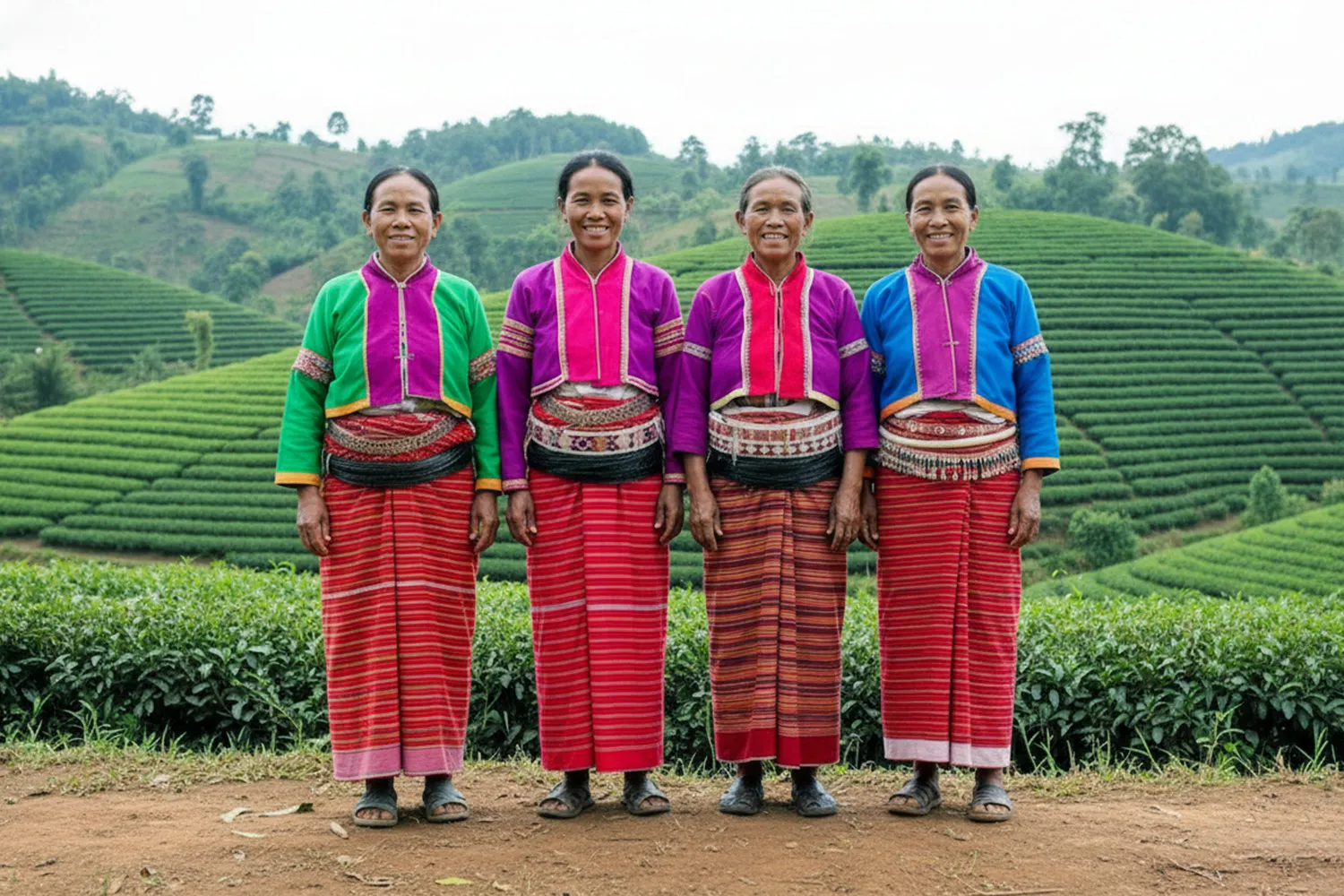
Historically, the Palong were renowned in Myanmar as master tea cultivators, and they brought this profound agricultural expertise with them to the hills of Northern Thailand. While their traditional economy once relied on shifting cultivation (slash-and-burn) to grow subsistence crops like upland rice and corn, they have undergone a remarkable transition toward sustainable and permanent farming. In modern-day Chiang Mai, the Palong are celebrated for their production of high-quality tea and have become integral participants in the Thai Royal Projects, which encouraged them to move away from opium cultivation toward temperate-climate cash crops. Today, their lush mountainside plantations yield strawberries, lychees, and various cool-season vegetables that are sold in lowland markets. Beyond agriculture, Palong women are exceptionally skilled in the art of weaving and back-strap loom textiles; their intricate hand-woven fabrics and traditional crafts have become a significant source of supplementary income, particularly as community-based tourism continues to grow in the region.
Spiritual Life and Social Structure:
The spiritual essence of the Palong is a complex and beautiful synthesis of Theravada Buddhism and ancient animistic beliefs, a duality that influences every aspect of their daily existence. While they are devout Buddhists—with every village centering its social and religious life around a local temple or monastery—they also maintain a profound reverence for the spirit world (nats). They believe that spirits inhabit the natural features of their environment, such as the mountains, old-growth trees, and water sources, requiring regular offerings to ensure harmony and protection. Their social structure is traditionally egalitarian but places a high value on the wisdom of village elders and the spiritual guidance of resident monks. The family unit is the cornerstone of their society, characterized by strong bonds of kinship and mutual aid; it is common for several generations to collaborate closely in both agricultural labor and the performance of complex religious rites, ensuring that their moral codes and cultural values are passed down seamlessly to the youth.
Traditional Dress and Symbolism:
The traditional costume of the Palong, particularly that of the women, is perhaps the most visually striking and symbolic among all the hill tribes in Thailand. The most iconic element is the heavy silver or lacquered bamboo waist hoops (rattan rings) worn around the midsection. According to Palong legend, these rings symbolize a trap used to catch a celestial silver bird-princess, and today they are worn as a badge of ethnic identity and a protective talisman. A typical woman’s ensemble consists of a vibrant red sarong with horizontal stripes, paired with a dark blue or black jacket trimmed with bright red flannel. Many women also wear white or colorful turbans and elaborate silver jewelry, including necklaces and earplugs, which reflect the family’s wealth and status. The men’s attire is generally more functional, consisting of loose-fitting black or indigo trousers and jackets, but they often don colorful sashes and turbans during ceremonial occasions to display their cultural heritage with pride.
Village Architecture and Layout:
Palong villages in the Chiang Mai highlands are typically situated at moderate altitudes, often nestled on mountain ridges or tucked into fertile valleys that provide a balance of security and agricultural viability. Their traditional architecture is unique; houses are built on sturdy wooden stilts to protect against the damp ground and to provide a shaded space beneath the home for livestock, firewood storage, and weaving looms. The structures themselves are often quite large to accommodate extended family units, with walls made of split bamboo or sturdy planks and roofs traditionally thatched with dried grass or large pluang leaves. Inside, the home is divided into a common living area and private sleeping quarters, with a central hearth that remains the heart of the household for cooking and social gathering. While modern materials like concrete and corrugated metal are increasingly used for durability, many families still incorporate a dedicated space for a Buddhist altar, ensuring that the spiritual sanctity of the home is maintained even as building styles evolve.
Festivals and Ceremonial Life:
The ceremonial calendar of the Palong is a rich tapestry of events that celebrate the intersection of the lunar cycle, the agricultural seasons, and Buddhist devotion. The most significant celebrations are those related to Buddhist Lent and the New Year, which involve elaborate communal feasting, music, and merit-making ceremonies at the village temple. A unique aspect of their ceremonial life is the performance of traditional dances, such as the “Sword Dance” or “Bird Dance,” accompanied by the rhythmic beating of large drums and cymbals, which are intended to honor both the Buddha and the local spirits. Another vital life-cycle event is the initiation of young boys into the monkshood, a time of great celebration that reinforces social cohesion and ensures the continuity of their religious traditions. These festivals are not merely social gatherings but are essential spiritual checkpoints that allow the Palong to express their gratitude for the harvest, seek protection for the coming year, and reaffirm their collective identity as a people of faith and tradition.