
Northern Thailand is a realm of mist-draped mountains, winding rivers, and age-old cultures that thrive far from the rush of modern life. For travelers yearning to step beyond Thailand’s familiar highlights and into a more soulful, less-traveled landscape, the legendary Mae Hong Son Loop stands as a rite of passage. This iconic route, famous for its countless curves and dramatic elevations, winds its way through dense forests, highland valleys, and small towns where time seems to slow to a gentler pace. Often completed in a week or more, the full loop rewards patience and endurance. However, this carefully curated 4-day, 3-night itinerary distills the very essence of the journey, offering a meaningful and immersive experience without the need for extended travel. Traveling counter-clockwise from Chiang Mai, the route is designed to ease travelers gradually into the mountainous terrain while highlighting the true heart of the province—Pai and Mae Hong Son. Each destination along the way reveals a different facet of northern Thailand, from Pai’s laid-back charm and creative spirit to Mae Hong Son’s serene temples, tranquil lakes, and deep-rooted cultural traditions. More than just a road trip, this journey is a slow unfolding of atmosphere and emotion. With every winding turn, the air grows cooler, the scenery more dramatic, and the pace of life noticeably calmer. Golden temples shimmer against forested hillsides, morning mist drifts through quiet valleys, and warm smiles from local communities offer a glimpse into a way of life shaped by nature and tradition. This is a journey meant not only to be seen, but deeply felt—through the hum of the road, the rhythm of village life, and the quiet moments of awe that arise in remote corners of Thailand’s western frontier. Prepare yourself for sharp curves, unforgettable vistas, and an adventure that lingers long after the road straightens again. The Mae Hong Son Loop is not simply a route on a map; it is a passage into the soul of northern Thailand, leaving travelers with memories etched as deeply as the mountains themselves. Route Map
Mae Hong Son Loop (Counterclockwise) – 4 Days / 3 Nights
DAY 1: Chiang Mai – Pai / Route Map
The journey begins in Chiang Mai, widely regarded as the cultural heart of Northern Thailand, a city where centuries-old temples, traditional neighborhoods, and contemporary cafés exist side by side in a uniquely harmonious balance. Early in the day, the city slowly fades behind as the road leads northward, leaving the urban rhythm for a more tranquil and scenic landscape. The route gradually climbs into the mountains, revealing sweeping views of valleys, forested slopes, and distant ridgelines. As the elevation increases, the temperature cools noticeably, and the air becomes crisp and refreshing, offering an immediate sense of escape from city life. The winding roads encourage a slower pace, allowing travelers to fully appreciate each curve, viewpoint, and changing layer of scenery. This first stretch of the journey sets a calm and immersive tone for the days ahead, highlighting the transition from cultural exploration to a deeper connection with nature and the highlands of Mae Hong Son province. The first stop along the route is Mok Fa Waterfall, a serene natural attraction nestled deep within a lush jungle environment. Accessing the waterfall requires only a short and easy walk through shaded forest trails, where sunlight filters through dense foliage and the sounds of nature gently replace the hum of the road. Birds call from the treetops, and the scent of damp earth and greenery fills the air, creating a peaceful and grounding atmosphere. Upon arrival, the waterfall reveals itself as a powerful cascade of clear mountain water flowing over rugged rock formations into a natural pool below. Surrounded by towering trees and thick vegetation, the setting feels untouched and refreshingly wild. Mok Fa Waterfall provides a perfect opportunity to pause the journey, stretch one’s legs, and cool down in a tranquil environment, while appreciating the raw beauty and natural energy that characterize Northern Thailand’s mountainous landscapes.

Continuing onward, the journey leads to Pong Dueat Pa Pae Hot Springs, one of the most fascinating and visually striking geothermal sites in Northern Thailand. Unlike conventional hot springs designed mainly for soaking, this natural area showcases powerful, geyser-like vents where mineral-rich water forcefully rises from deep beneath the earth’s surface. As the hot water meets the cool mountain air, thick clouds of steam drift upward, creating an almost otherworldly atmosphere. Carefully constructed wooden boardwalks wind through the site, guiding visitors safely across the geothermal field while offering close-up views of the bubbling pools, steaming vents, and continuously shifting patterns of water and vapor. The surrounding forest, dense and vibrant, enhances the sense of serenity, while the contrast between the warmth of the steam and the crisp air provides a deeply immersive experience that vividly reflects the region’s dynamic geological character.
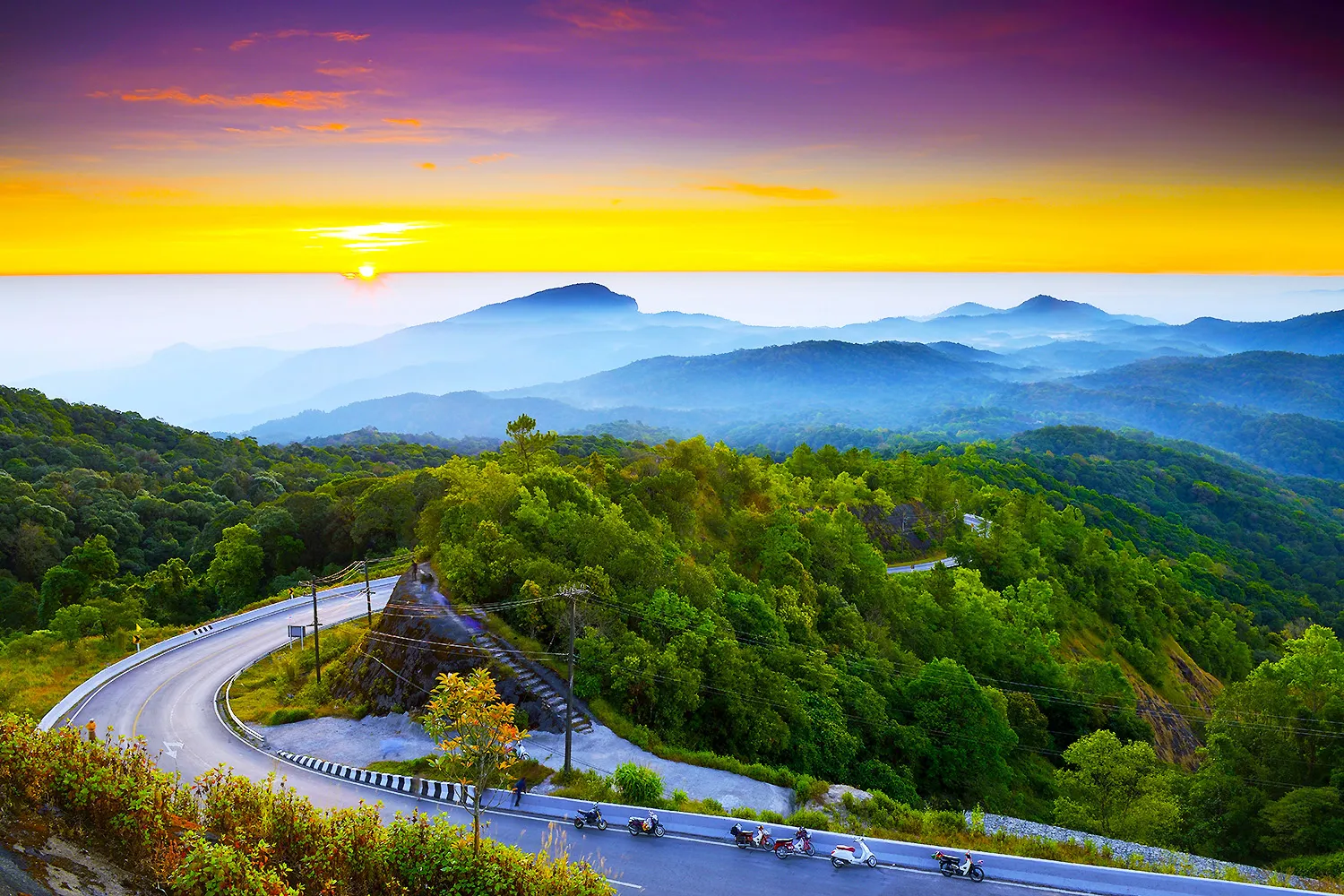
The drive then continues deeper into the mountainous terrain toward Huai Nam Dang National Park, a protected natural area celebrated for its vast landscapes and breathtaking viewpoints. This national park is particularly renowned for its panoramic vistas of layered mountain ranges that stretch endlessly across the horizon. In the early hours, the valleys are often filled with soft, rolling mist, gently drifting between the peaks and creating a dreamlike scene that feels both peaceful and grand. From the viewpoints, travelers can observe waves of forested hills gradually fading into the distance, offering a powerful sense of scale and natural harmony. On clear days, the scenery becomes even more dramatic, with sharp ridgelines and vivid shades of green making this stop one of the most iconic and memorable highlights along the route.
Upon arriving in Pai, the exploration begins with a visit to Pai Canyon, one of the town’s most dramatic and visually striking natural landmarks. Shaped over centuries by the combined forces of wind and water erosion, the canyon reveals a complex network of narrow ridges, steep drops, and winding pathways carved into layers of reddish-brown earth. As visitors carefully walk along these elevated trails, each step offers a sense of excitement balanced by breathtaking rewards. From the ridge tops, sweeping panoramic views unfold across surrounding valleys, dense forests, and distant mountain ranges, emphasizing the rugged beauty of the Pai landscape. In the late afternoon, as the sun gradually descends, the light softens and casts warm golden tones across the terrain. This magical moment transforms the canyon into a glowing masterpiece, making it an ideal time for photography, quiet contemplation, and fully absorbing the raw, untamed character of the region.
Another memorable stop is the Kho Ku So Bamboo Bridge, a graceful and understated structure that stretches elegantly across vast rice fields on the outskirts of Pai. Built entirely from natural bamboo, the bridge reflects both simplicity and thoughtful design, blending seamlessly into its rural surroundings. Originally constructed by local villagers to allow monks easier access to a nearby temple during the rainy season, the bridge stands today as a meaningful symbol of community cooperation and sustainable living. Walking along its narrow pathway encourages a slow, mindful pace, offering visitors the chance to observe traditional farming practices, local village life, and the subtle rhythms of the countryside. During the green season, the surrounding rice paddies burst into vibrant shades of emerald, gently swaying in the breeze and creating a peaceful, picturesque atmosphere that captures the timeless charm of rural Northern Thailand.
As evening approaches, the journey continues to Wat Phra That Mae Yen, one of Pai’s most revered hilltop temples and a prominent spiritual landmark overlooking the town. The temple is best known for its large White Buddha statue, seated serenely and gazing out across the valley below, symbolizing peace and protection for the surrounding community. Reaching the temple requires climbing a long staircase that gently winds its way up the hillside, a journey that feels both meditative and rewarding. With each step, the sounds of the town grow quieter, replaced by a sense of calm and reflection. Upon reaching the summit, expansive panoramic views unfold across Pai’s valley, where clusters of rooftops, open fields, and winding roads blend seamlessly with the surrounding mountains. As the sun begins to set, the sky gradually transforms into a rich palette of orange, pink, and soft purple hues. This tranquil moment, suspended between day and night, creates an atmosphere that feels deeply spiritual and offers a perfect opportunity to pause, reflect, and take in the beauty of Pai from above.
The day concludes with a visit to Pai Walking Street, the vibrant yet relaxed heart of the town after sunset. As evening settles in, the main street comes alive with rows of colorful food stalls, their aromas filling the air and inviting visitors to sample a wide variety of dishes. From beloved Northern Thai specialties to international comfort foods and creative street snacks, the selection reflects Pai’s diverse and welcoming character. Alongside the food, stalls selling handmade crafts, clothing, and unique souvenirs showcase the creativity of local artisans and the town’s artistic spirit. Live music performances echo softly through the street, enhancing the laid-back, bohemian atmosphere that Pai is known for. Wandering through the walking street provides an ideal way to unwind after a day of exploration, offering opportunities to interact with locals, meet fellow travelers, and fully embrace the warm, easygoing charm of this mountain town. The night is spent in Pai, where cool mountain air and a peaceful small-town ambiance create a restful and memorable end to the day. Things to do in Pai.
DAY 2: Pai – Mae Hong Son / Route Map
After breakfast, the journey continues as you depart from the relaxed mountain town of Pai and travel onward toward Mae Hong Son, heading deeper into one of Northern Thailand’s most remote and scenic regions. The road passes through Pang Mapha District, an area renowned for its dramatic natural landscapes and strong sense of cultural heritage. Along this stretch, towering limestone mountains rise abruptly from the earth, their jagged formations creating a striking contrast against the sky. Dense forests blanket the steep hillsides, while narrow valleys and winding roads guide travelers through an ever-changing panorama of rugged terrain. As the journey unfolds, small traditional villages appear intermittently along the roadside, offering quiet glimpses into rural life. These communities, many of which are home to hill tribe groups, have lived in harmony with the surrounding mountains for generations. The farther the road leads from Pai, the more pronounced the feeling of remoteness becomes, reinforcing the adventurous spirit and sense of discovery that define the Mae Hong Son Loop. One of the first stops along this route is Pang Mapha Viewpoint, a scenic overlook that perfectly captures the raw and untamed beauty of the region. From this elevated vantage point, an expansive panorama of limestone peaks and deep valleys stretches endlessly across the horizon. The layered mountain ranges appear to rise and fall in dramatic waves, emphasizing both the scale and ruggedness of the landscape. Depending on the time of day, shifting light and drifting clouds cast dynamic shadows across the terrain, adding depth, texture, and a sense of movement to the view. This makes the viewpoint especially rewarding for photography, as no two moments look exactly the same. Standing here, surrounded by open space and fresh mountain air, visitors gain a deeper appreciation for the vast wilderness and geological diversity that characterize Northern Thailand’s highlands.
The journey then continues to Tham Lod Cave, one of the largest and most awe-inspiring cave systems in Northern Thailand. This extraordinary natural attraction is explored through a combination of walking and a gentle bamboo raft ride, allowing visitors to experience the cave from multiple perspectives. Drifting slowly along the underground river, the only sounds are the quiet movement of water and echoes from the vast chambers above. Inside the cave, enormous caverns open dramatically, revealing towering rock formations shaped over thousands of years by water and mineral deposits. Intricate stalactites hang from the ceiling while stalagmites rise from the ground, creating an almost surreal and otherworldly atmosphere. Beyond its geological beauty, Tham Lod Cave holds deep historical significance as an important archaeological site. Ancient wooden coffins, believed to be more than two thousand years old, rest within the cave, offering rare and fascinating insight into the lives and burial practices of the region’s prehistoric inhabitants.
The next stop is Jabo Village, a traditional Lahu hill tribe settlement dramatically situated along a mountain ridge, surrounded by sweeping views of forests and deep valleys. The village is especially renowned for its spectacular viewpoint, where a “sea of clouds” often forms in the early morning hours, slowly drifting through the valleys below and creating a scene of remarkable serenity. Even outside the early morning period, the elevated setting provides expansive views and a strong sense of isolation from the modern world. Beyond its scenic appeal, Jabo Village offers meaningful insight into the simple and self-sufficient lifestyle of the Lahu people. Their daily lives are closely connected to the natural environment, and many traditional customs, beliefs, and ways of living have been carefully preserved across generations. A visit to the village allows travelers to experience authentic highland culture firsthand, while enjoying one of the most peaceful and atmospheric settings found anywhere along the Mae Hong Son Loop.
Another scenic stop along the route is Luk Khao Lam Viewpoint, a lesser-known yet visually striking vantage point that offers a unique perspective on the mountainous terrain of Mae Hong Son Province. From this elevated location, the winding road below can be seen gracefully carving its way through rolling hills and densely forested slopes. The sweeping curves of the asphalt resemble long ribbons weaving through layers of green, creating a dynamic and captivating scene that highlights both the natural contours of the land and the craftsmanship of the route itself. The viewpoint provides a quiet and refreshing pause in the journey, inviting travelers to step away from the road, breathe in the cool mountain air, and take in the expansive scenery. It is an ideal spot for photography, reflection, and a short rest before continuing onward into deeper sections of the highlands.
Before reaching Mae Hong Son town, the journey includes a visit to Tham Pla – Namtok Pha Suea National Park, a protected area celebrated for its tranquil forest setting and distinctive natural features. One of the park’s main highlights is Tham Pla, also known as the Fish Cave, where a clear freshwater stream emerges gently from a limestone cavern. In the shaded pools below, large schools of fish gather and move gracefully through the water, creating a calming and almost meditative scene. Wooden walkways extend across the area, allowing visitors to observe the fish at close range while preserving the natural environment. Surrounding the cave, tall trees and lush vegetation provide cooling shade, and well-maintained paths invite a leisurely stroll through the forest. This peaceful stop offers an ideal opportunity to slow down, rest, and reconnect with nature before the final approach to Mae Hong Son.
Arriving in Mae Hong Son town in the late afternoon, the journey gradually slows as the day draws to a close. The final highlight is a visit to Wat Phra That Doi Kong Mu, the most important and deeply revered temple in Mae Hong Son Province. Perched gracefully atop a hill overlooking the town, the temple complex is distinguished by its elegant white chedis and serene surroundings, creating a striking contrast against the rich colors of the evening sky. The ascent to the temple offers a sense of anticipation, and upon arrival, expansive panoramic views unfold across Mae Hong Son’s valley. From this elevated vantage point, the town below, the small airport, and the surrounding mountain ranges are bathed in warm, golden light as the sun begins its descent. As sunset approaches, the sky slowly transforms into layers of soft orange, pink, and purple, casting a gentle glow over the landscape. The atmosphere becomes increasingly calm and contemplative, inviting visitors to pause, reflect, and absorb the peaceful energy of the setting. The quiet presence of the temple, combined with the sweeping views and cooling mountain air, creates a deeply memorable moment that marks a fitting and graceful conclusion to the day’s journey. Overnight accommodation is in Mae Hong Son, where the cool climate, unhurried pace of life, and tranquil surroundings provide the perfect environment for rest and reflection before the adventures that continue in the days ahead.
DAY 3: Mae Hong Son Exploration / Route Map
This day is dedicated to exploring the rich cultural heritage and natural beauty that surround Mae Hong Son, with a deliberately slower pace that encourages deeper immersion into the region’s distinctive character. After several days of winding mountain roads and dramatic landscapes, the itinerary shifts toward a more relaxed and reflective experience. The day begins with a tranquil boat trip along the Pai River, where calm, gently flowing waters offer a soothing contrast to the adventurous drives of previous days. As the boat glides quietly along the river, lush forested banks frame the waterway, while traditional wooden houses appear intermittently along the shoreline. Scenes of daily riverside life gradually unfold, from locals tending to small gardens to fishermen moving patiently along the banks, creating an intimate and unhurried glimpse into the rhythm of life in Mae Hong Son’s rural surroundings. During the river journey, there is an opportunity to stop and visit a Long-Neck Karen village, home to one of Northern Thailand’s most distinctive ethnic communities. This visit offers meaningful insight into the history, customs, and traditional lifestyle of the Karen people, whose cultural identity has been carefully preserved over generations. The women of the village are especially recognized for wearing brass neck rings, a practice deeply rooted in cultural tradition and symbolism rather than mere ornamentation. Walking through the village, travelers can observe daily activities and explore handwoven textiles, handicrafts, and traditional clothing, each piece reflecting skills, stories, and techniques passed down through family lines. The experience provides a respectful and educational encounter, allowing visitors to better understand the community’s values, resilience, and enduring connection to their ancestral heritage and natural environment.
The exploration continues with a visit to Su Tong Pae Bamboo Bridge, one of Mae Hong Son’s most iconic and visually distinctive landmarks. Stretching gracefully across a gentle river and wide expanses of rice fields, this long bamboo walkway blends seamlessly into the rural landscape. The bridge was originally constructed by local villagers to allow monks to travel easily between the nearby village and a monastery across the fields, particularly during the rainy season. Beyond its practical purpose, Su Tong Pae Bridge has come to represent a powerful symbol of cooperation, faith, and mutual respect between the monastic community and local residents. Walking slowly across the bridge offers peaceful views of the surrounding countryside, where rice paddies, distant hills, and open skies create a sense of calm and simplicity. The quiet atmosphere and natural setting make this stop especially photogenic and ideal for moments of reflection.
Next, the journey leads to Pha Suea Waterfall, a broad and gently cascading waterfall set within a lush, forested environment. Unlike steep or thunderous waterfalls, Pha Suea Waterfall flows smoothly across multiple rock terraces, with clear water gliding steadily over wide stone surfaces. The surrounding greenery provides cooling shade, while well-maintained paths allow for easy access and relaxed exploration of the area. The constant, soothing sound of flowing water enhances the tranquil atmosphere, inviting visitors to pause and enjoy the natural surroundings. This refreshing stop offers a welcome break from the road and an opportunity to reconnect with nature, before continuing with the day’s exploration around Mae Hong Son.
In the afternoon, the journey continues to Ban Rak Thai, a charming and highly picturesque village situated near the border with Myanmar. Established by descendants of Chinese Yunnanese settlers, the village has preserved a strong and distinctive cultural identity that is immediately apparent upon arrival. Traditional clay and mud-brick houses are built along the hillsides, overlooking a calm mountain lake at the heart of the village. Surrounding the settlement, tea plantations blanket the slopes in neat, carefully tended rows, creating a harmonious blend of human settlement and natural landscape. The cool mountain climate enhances the village’s tranquil atmosphere, offering a refreshing contrast to the warmer lowland areas of Northern Thailand. Walking through Ban Rak Thai provides opportunities to sample locally grown teas, enjoy authentic Yunnan-style cuisine, and observe daily life shaped by a unique fusion of Thai and Chinese heritage. The village’s peaceful setting and cultural richness make it a memorable highlight of the Mae Hong Son region.
The day concludes with a visit to Pang Ung, often referred to as the “Switzerland of Thailand” due to its alpine-like scenery and serene natural environment. Nestled within a vast pine forest, this scenic reservoir is celebrated for its still waters, cool temperatures, and romantic, almost ethereal ambiance. In the late afternoon, soft sunlight filters gently through tall pine trees, casting long shadows and illuminating the forest floor. The reflections of the trees shimmer across the glassy surface of the lake, creating a scene that feels both calm and dreamlike. As evening approaches, mist frequently lingers above the water, further enhancing the sense of quiet beauty and seclusion. After spending time absorbing the peaceful surroundings, the journey returns to Mae Hong Son for another overnight stay, where the cool mountain air and relaxed pace of town life provide a restful end to the day’s exploration. Things to do in Mae Hong Son.
DAY 4: Mae Hong Son – Chiang Mai / Route Map
Departing Mae Hong Son in the early morning, the journey begins along the scenic return route toward Chiang Mai, marking the final leg of the Mae Hong Son Loop. The road passes through the districts of Khun Yuam and Mae Chaem, areas known for their unspoiled landscapes and quiet rural charm. Along this stretch, the scenery gradually shifts and unfolds like a living tapestry, ranging from misty mountain passes and forested ridgelines to wide valleys and gently rolling hills. Small farming communities appear intermittently along the route, with traditional wooden houses, terraced fields, and roadside markets offering subtle glimpses into everyday village life. As the road winds through these remote regions, sweeping viewpoints and peaceful surroundings reinforce a sense of isolation and tranquility, allowing travelers to reflect on the journey while remaining deeply connected to the natural environment. The drive itself becomes an integral part of the experience, blending scenic beauty with the calm rhythm of Northern Thailand’s countryside. A major highlight along the way is a visit to Doi Inthanon National Park, one of Thailand’s most renowned natural treasures and home to the country’s highest peak. Often referred to as the “Roof of Thailand,” the park is celebrated for its cool mountain climate, which remains refreshing throughout the year. Doi Inthanon is rich in biodiversity, featuring lush evergreen forests, towering trees draped in moss, and a variety of vibrant bird species that thrive in the high-altitude environment. Well-maintained nature trails guide visitors through shaded forest paths and along scenic viewpoints, encouraging exploration at a relaxed and comfortable pace. The crisp mountain air, combined with the quiet beauty of the surroundings, provides a refreshing contrast to the heat of the lowlands and offers a final opportunity to fully appreciate the ecological richness and natural grandeur of Northern Thailand’s highlands.
Within the park, a visit to the Twin Royal Pagodas offers a meaningful blend of cultural significance and breathtaking scenery. These elegant structures were built to honor the King and Queen of Thailand, standing as symbols of respect, devotion, and national pride. Rising gracefully above the surrounding landscape, the pagodas are set within meticulously maintained gardens that showcase vibrant seasonal flowers, neatly trimmed hedges, and carefully designed pathways. As visitors wander through the gardens, the cool mountain air and peaceful atmosphere enhance the sense of refinement and harmony between architecture and nature. From this elevated location, expansive panoramic views stretch across rolling mountain ranges and deep valleys below. Drifting clouds often pass through the landscape, while gentle breezes add to the refreshing ambiance, making this stop one of the most memorable and visually rewarding highlights within Doi Inthanon National Park.
The journey then continues to Wachirathan Waterfall, one of the most powerful and dramatic waterfalls in the park. Fed by mountain streams flowing year-round, the waterfall plunges forcefully over a broad cliff, sending cascades of white water crashing into the gorge below. The constant roar of the falling water fills the surrounding forest, while a fine mist rises into the air, cooling the atmosphere and adding to the sense of raw natural energy. On sunny days, rainbows often appear in the spray, creating a striking contrast against the dark rock face and lush greenery. Well-positioned viewing platforms allow visitors to safely observe the waterfall from close range, offering an immersive experience that highlights the strength and beauty of Northern Thailand’s highland waterways. This impressive stop serves as a fitting highlight before continuing the journey onward from the mountains.
The return drive to Chiang Mai continues through gently changing countryside, as mountain scenery slowly transitions into wider valleys and more developed landscapes. Along the way, the road passes through rural communities, open farmland, and stretches of greenery that provide a final opportunity to reflect on the diverse environments experienced throughout the journey. As the distance to Chiang Mai shortens, the surroundings gradually become more familiar, with increased traffic, expanding suburbs, and the first signs of urban life appearing on the horizon. Arrival in Chiang Mai is expected in the late afternoon or early evening, as the city’s skyline and bustling streets signal the return to a more energetic pace of life. This final stretch marks the quiet conclusion of a richly varied and deeply immersive Mae Hong Son Loop experience, one shaped by dramatic mountain landscapes, cultural encounters, and moments of peaceful reflection.
Important Note:
For travelers visiting in November, an additional highlight along the route is a stop in Khun Yuam District, which is renowned for its spectacular fields of Mexican Sunflowers, locally known as Bua Tong. During this short but stunning blooming season, vast hillsides are blanketed in vibrant shades of golden yellow, transforming the landscape into one of the most visually striking scenes in Northern Thailand. Well-known viewpoints and walking paths allow visitors to fully appreciate the scale and beauty of the flowers, with sweeping views over valleys and surrounding mountains. This seasonal phenomenon offers exceptional photo opportunities and adds a unique, time-sensitive experience to the journey, making November an especially rewarding time to explore the Mae Hong Son Loop.
Conclusion:
In summary, this 4-day, 3-night counter-clockwise journey along the Mae Hong Son Loop delivers a truly immersive adventure for nature lovers, cultural explorers, and thrill-seekers alike. The route embodies the spirit of Northern Thailand, offering travelers an unforgettable blend of breathtaking scenery, authentic cultural encounters, and exciting experiences. Highlights include ascending Thailand’s highest peak, admiring sweeping mountain vistas and lush forests, and discovering the spiritual charm of centuries-old temples. Along the way, you’ll have the chance to connect with diverse hill tribes, marvel at dramatic caves and cascading waterfalls, and relax in soothing natural hot springs. Even the drive itself is a delight, with panoramic views unfolding at every turn. The Mae Hong Son Loop is more than just a road trip—it is a journey that captures the heart of the region and leaves lasting memories long after the adventure concludes.
Useful Tips and Information
Distances:
Here are the approximate distances between major points for the Mae Hong Son Loop, following the main routes of Highway No. 107 and Highway No. 1095: Chiang Mai to Pai 163 km / Pai to Pang Mapha 42 / Pang Mapha to Mae Hong Son 66 km / Mae Hong Son Sightseeing 73 km / Mae Hong Son to Khun Yuam 67 / Khun Yuam to Mae Cheam 71 / Mae Cheam to Doi Inthanon 60 / Doi Inthanon to Chiang Mai 110 km. Note: The distances provided only account for the main routes and do not include additional travel to nearby attractions along the way.
Accommodations:
According to our designed Mae Hong Son Loop itinerary, you will spend the first night in Pai, the second night and the third night in Mae Hong Son. Each of these cities offers a diverse range of accommodations to suit various budgets, from affordable guesthouses to luxurious hotels. However, during the high season (November to January), accommodations can often be fully booked. To ensure a smooth trip, we highly recommend researching and booking your accommodations in advance through various online booking platforms. If you are planning your own trip and have several days to explore, you might consider staying in other cities besides those listed above, such as Pang Mapha, Khun Yuam, and Mae Chaem. These cities also offer accommodations for travelers, although the options may be more limited.
Trip Duration:
The recommended duration for a trip around the Mae Hong Son Loop is 4–6 days. This allows for a relaxed journey where you can explore various attractions, unwind without feeling rushed, and visit more destinations spread out along different routes. A longer trip gives you the flexibility to fully enjoy the experience and appreciate the beauty of the region. If you’re short on time, it’s possible to complete the Mae Hong Son Loop in 3 days. However, a shorter trip means less time to visit attractions, as most of your schedule will be spent on the road. To optimize a 3-day itinerary, avoid the longer route that passes through Chiang Mai, Pai, Pang Mapha, Mae Hong Son, Khun Yuam, Mae La Noi, Mae Sariang, Chom Thong, and back to Chiang Mai, as it covers a considerable distance. Instead, consider the Chiang Mai–Pai–Pang Mapha–Mae Hong Son–Khun Yuam–Mae Chaem–Chiang Mai route, either for the outbound or return leg of your journey. This alternative significantly reduces travel time. Travelers often wonder whether to go clockwise or counterclockwise around the Mae Hong Son Loop. Ultimately, the choice depends on your preferences and travel plans, as both directions offer equally rewarding experiences.
Best Time to Visit the Mae Hong Son Loop:
The ideal time to travel is between November and February, which marks the region’s winter season. During this period, the weather is pleasantly cool, the skies are clear, and the scenery is stunning. Travelers can enjoy breathtaking views of mountains adorned with vibrant foliage. However, the popularity of this season means that many tourist spots are crowded, so it’s best to plan accordingly. Traveling during the rainy season, from mid-June to mid-October, is also a viable option. While you’ll need to monitor weather conditions for possible tropical depressions, heavy rains, or flooding, this season offers a unique experience. The landscapes transform into lush, green carpets of forest, and the cooler temperatures make for a comfortable journey. Additionally, tourist attractions are less crowded, allowing for a more serene and local experience. Driving in the rain can pose challenges, so caution is advised. However, overall, there is little to worry about when exploring during this time. The season to avoid, if possible, is summer, from March to May. While travel is still feasible, the intense heat and humidity can make outdoor activities less enjoyable. The landscapes are often dry, and occasional smoke from forest fires can impact visibility and air quality.
Driving Skills and Road Conditions:
The Mae Hong Son Loop is renowned for its breathtaking landscapes and scenic beauty, but it is equally famous for its challenging and winding roads. Therefore, it is essential for travelers to possess proficient driving skills and experience in handling vehicles on steep, narrow, and winding routes. This circuit is not suitable for novice drivers or those who are inexperienced in navigating demanding terrains. Drivers should be confident in their ability to maneuver through hairpin bends, steep inclines, and potentially slippery surfaces, as safety should always be a top priority. Additionally, it is important to have a valid driver’s license.
Vehicle Rental:
Chiang Mai, being a popular starting point for the Mae Hong Son Loop, offers a variety of car and motorbike rental shops. Tourists have the option to book their vehicles in advance online or visit a rental shop in person. It is highly recommended to carefully review and understand the terms and conditions of the rental agreement before signing. Ensure that the rental vehicle comes with comprehensive insurance coverage that includes both accident and damage insurance. Prior to driving the vehicle out of the shop, conduct a thorough inspection of its condition to avoid any disputes later on. Taking photographs of any existing damages and verifying the vehicle’s functionality can save you from potential issues.
Recommended Vehicles:
For a comfortable and smooth journey along the Mae Hong Son Loop, choosing the right type of vehicle is crucial. While any car can technically navigate the route, it is advisable to opt for a high-horsepower vehicle that is in excellent condition. A powerful engine will make it easier to tackle the steep and winding roads, ensuring a more enjoyable and less strenuous driving experience. If you prefer traveling by motorcycle, select one with an engine power of at least 150 cc. This is especially important if you are carrying a passenger, as a higher-powered motorcycle will provide better stability and control. Prioritize safety and comfort by choosing a well-maintained vehicle that can handle the demands of the loop. For electric vehicles, although it is possible to travel the Mae Hong Son Loop with this type of vehicle, it is not recommended due to the high risk of problems during the journey. First, if there is a mechanical problem, it can be difficult to find a repair shop or mechanic skilled in solving the issue. Second, most of the charging stations are located only in tourist cities such as Pai and Mae Hong Son, which are quite far apart and have few charging stations. This means that charging may take a long time. Lastly, accessing tourist attractions far from the main routes may cause concerns about the vehicle’s electrical power, making the journey less enjoyable.
Fuel and Charging:
Fuel availability along the Mae Hong Son Loop is generally reliable, with gas stations located in most towns you will pass through. However, if you plan to visit attractions that are off the main route, it is essential to calculate your fuel requirements in advance. Make sure you have enough fuel to reach the next gas station, especially if your detour takes you far from the established itinerary. Carrying an extra fuel canister can be a prudent measure for added security. Monitoring your fuel levels regularly and planning your refueling stops will ensure a smooth and uninterrupted journey. For electrically powered vehicles, it may not be convenient because there are few electric charging stations on the Mae Hong Son Loop route, and they are only located in tourist cities such as Mae Hong Son and Pai.
Traveling at Night:
Traveling at night along the Mae Hong Son Loop is generally not advisable due to the isolation and potential difficulties that may arise. The route itself is characterized by long stretches between towns and villages, making it challenging to find assistance in the event of an emergency. Moreover, the lack of adequate lighting on the roads can make navigation treacherous, particularly for those unfamiliar with the area. Additionally, some parts of the loop may lack mobile phone signal coverage, which can further complicate matters if you encounter any issues. For these reasons, it is highly recommended to plan your travels during daylight hours, ensuring you have ample time to reach your destination safely.
Safety Considerations:
While the Mae Hong Son Loop presents a few challenges, particularly in terms of driving, it is not inherently dangerous. The primary concern for travelers should be the potential for accidents due to the winding and steep nature of the roads. However, the local population is known for their friendliness and hospitality towards tourists. Should you encounter any problems during your journey, you can usually rely on the locals to offer assistance. Their willingness to help and their familiarity with the area can be a great asset to travelers navigating the loop.
Emergency Preparedness:
In the event of any issues with your vehicle, such as engine trouble or other mechanical problems, your first course of action should be to contact the rental shop where you obtained the vehicle. Inform them of the problem and seek their guidance on the best course of action. In the unfortunate event of an accident, it is crucial to notify the rental shop as well as seek additional assistance. The Tourist Police can be reached at 1155, providing support specifically for tourists. For medical emergencies, dial 1669 for immediate medical assistance. In cases of urgent emergencies requiring police intervention, call 191 for help from the local police. It is essential to note your coordinates or location at the time of the incident to provide accurate information to emergency services, ensuring they can reach you promptly.
Mae Hong Son Loop Certificate:
The Mae Hong Son Loop Certificate is a cherished recognition bestowed upon travelers who embark on the exhilarating journey to Mae Hong Son by driving through its challenging roads, characterized by steep ascents and thousands of curves. This certificate serves as a testament to the travelers’ determination and spirit of adventure. Administered by the Mae Hong Son Provincial Chamber of Commerce, this certificate is a unique memento that acknowledges and appreciates the efforts of visitors who have successfully conquered the demanding route to Mae Hong Son. It symbolizes the commitment and perseverance required to navigate the region’s rugged terrain and winding roads. For travelers seeking to obtain the Mae Hong Son Loop Certificate, the process typically involves a visit to the Mae Hong Son Provincial Chamber of Commerce Office or the Mae Hong Son Tourism Business Association. Here, travelers can request their certificate as a tangible reminder of their remarkable journey through the picturesque landscapes and challenging roads of Mae Hong Son. Whether proudly displayed on a wall or tucked away as a cherished keepsake, the Mae Hong Son Loop Certificate serves as a symbol of accomplishment and a treasured memory of a remarkable adventure through one of Thailand’s most captivating regions.
Mae Hong Son Loop Map (Counterclockwise Route)