Lamphun Tourist Information

Nestled in serenity, Lamphun unfolds as a quaint and tranquil province, exuding the mesmerizing allure of nature and culture. This hidden gem boasts a plethora of captivating tourist attractions, inviting travelers to embark on an unforgettable journey through time and scenic landscapes. Among Lamphun’s foremost treasures lie its ancient temples, adorned with stunning local architecture that resonates with timeless beauty. These awe-inspiring structures serve as living testaments to the region’s rich cultural heritage. Wander through the hallowed grounds of these temples, and you will be transported back to bygone eras, where spirituality and craftsmanship converged to create marvels that continue to inspire awe. For nature enthusiasts, Lamphun presents an array of breathtaking natural wonders, each offering a picturesque ambiance that captivates the soul. Be it tranquil lakes reflecting the cerulean skies, verdant forests teeming with life, or rolling hills draped in lush greenery, the province provides a haven of tranquility and serenity for travelers seeking respite from the bustling world. Exploring Lamphun is an invitation to delve into a harmonious blend of heritage and nature. As you traverse its serene landscapes and immerse yourself in its cultural riches, you will forge a profound connection with this idyllic realm. Lamphun Province, located approximately 653 kilometers from Bangkok, spans an area of approximately 4,505 square kilometers. It shares its borders with Chiang Mai Province, Lampang Province, and Tak Province. The administrative divisions of Lamphun Province include 8 districts: Mueang Lamphun, Mae Tha, Ban Hong, Li, Thung Hua Chang, Pa Sang, Ban Thi, and Wiang Nong Long.
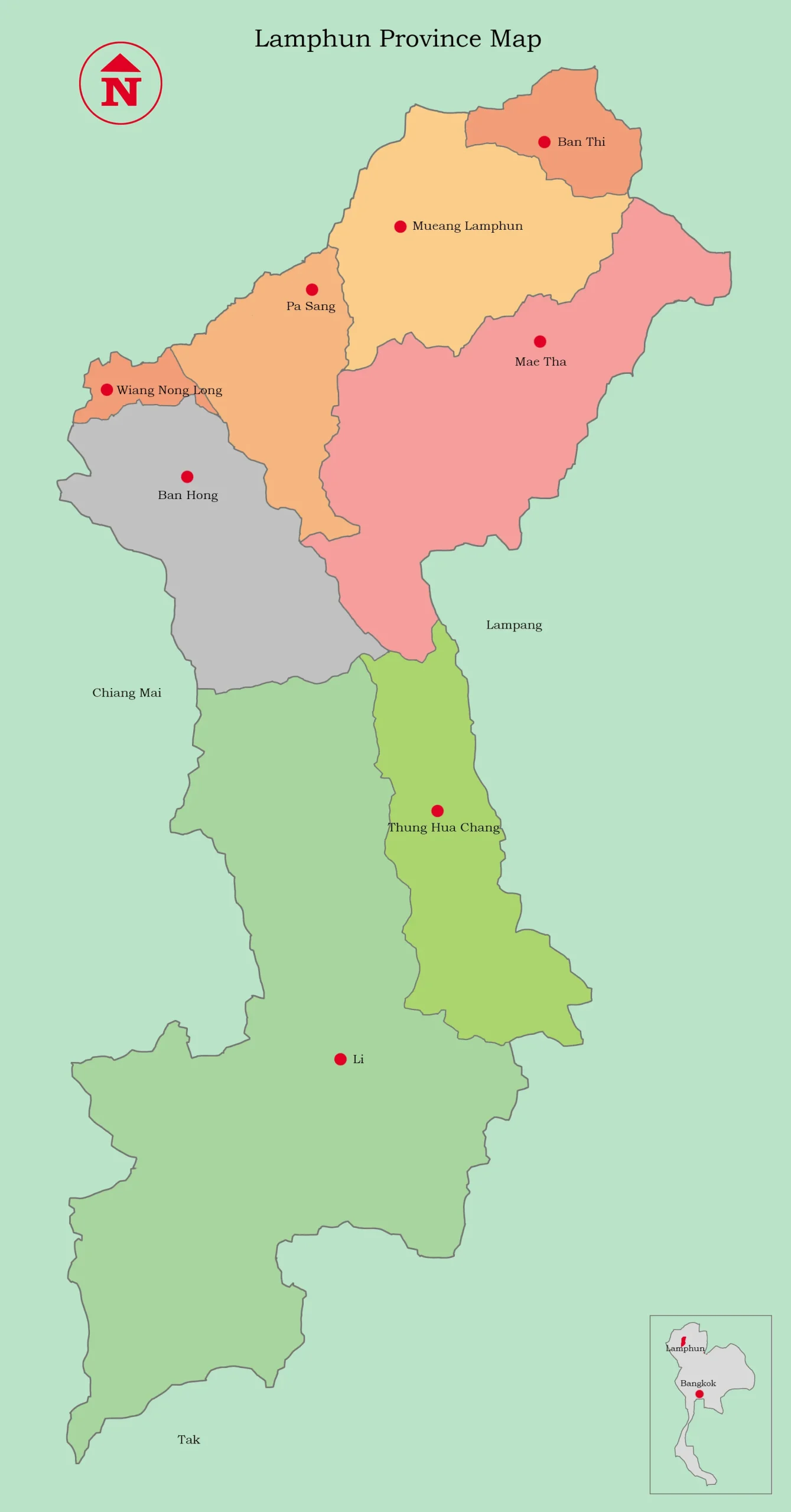
Lamphun Province Map

Transportation and Accommodation

Traveling to Lamphun Province offers various convenient options for tourists, ranging from personal cars to buses, trains, and airplanes. For those journeying by car from Bangkok, the route typically involves taking Highway No. 1 and then transitioning onto Highway No. 32 through Phra Nakhon Si Ayutthaya and Ang Thong. From there, travelers continue along Highway No. 1, passing through Kamphaeng Phet, Tak, and Lampang, before finally arriving at Lamphun Province via Highway No. 11. Alternatively, air-conditioned buses operate daily between Bangkok and Lamphun, providing multiple trips throughout the day. Traveling by train presents another viable option, with trains departing from Bangkok’s Apiwat Central Station bound for Lamphun, and vice versa, on a daily basis. However, direct flights to Lamphun are unavailable. Travelers typically fly into Chiang Mai and then proceed to Lamphun by bus. From Chiang Mai Airport, the journey to Lamphun city takes approximately 40 minutes. For up-to-date bus and train schedules, as well as information on airlines offering flights to Chiang Mai, travelers can refer to reliable online resources such as. State Railway of Thailand 12Go.asia and Bus Online Tickets. TripAdvisor, Agoda, Booking.com, Expedia, Kayak and Traveloka.

Lamphun City

Tourist Attractions

The Phra Nang Chamathewi Monument:
The Phra Nang Chamathewi Monument is a profound tribute to Queen Chamathewi, the founding monarch of the ancient Hariphunchai Kingdom. Located in the vibrant heart of Lamphun, this monument holds a cherished place in the cultural and historical fabric of the region. Situated in the Nai Mueang Subdistrict, it is conveniently positioned just behind the bustling Nong Dok Market, a mere kilometer away from the Wat Phra That Hariphunchai Woramahawihan Temple. This proximity ensures that the monument remains an accessible and prominent landmark for both residents and visitors. Queen Chamathewi, a figure of immense historical significance, was a visionary leader whose reign left an indelible mark on the Hariphunchai Kingdom and beyond. Her exceptional governance combined wisdom, valor, and a deep commitment to the betterment of her people. Renowned for her philosophical insight and virtuous character, she was also celebrated as a formidable warrior who safeguarded her kingdom against external threats. Her strategic acumen and leadership not only ensured the stability of her reign but also laid a strong foundation for the future prosperity of the region. One of Queen Chamathewi’s most enduring contributions was her pivotal role in introducing Buddhism to the Hariphunchai Kingdom. Under her guidance, the principles of Buddhism flourished, shaping the spiritual and cultural identity of the area. This religious transformation was accompanied by a vibrant blossoming of arts and culture, as the queen actively promoted artistic expression and cultural exchange. The legacy of her patronage can still be seen in the region’s architectural marvels, intricate craftsmanship, and timeless traditions that continue to define the local way of life.

The Phra Nang Chamathewi Monument stands not merely as a commemorative structure but as a living testament to her enduring legacy. Visitors to the monument are often struck by its symbolic significance and the reverence it inspires. The statue itself captures the essence of Queen Chamathewi—a ruler of grace and strength who embodies the ideals of leadership and cultural enrichment. Surrounding the monument, the carefully curated landscape adds to the sense of serenity and reflection, offering a space where visitors can pay homage to the queen’s remarkable achievements. Today, the Phra Nang Chamathewi Monument continues to be a focal point of cultural pride for the people of Lamphun. It serves as a reminder of the rich heritage that Queen Chamathewi helped to shape and preserve. Annual ceremonies and festivals held in her honor draw crowds from near and far, celebrating her life and contributions with traditional performances, rituals, and communal activities. These events not only reinforce the queen’s lasting influence but also strengthen the bonds of community among the people who gather to remember and honor her. In essence, the Phra Nang Chamathewi Monument is more than a historical landmark; it is a beacon of inspiration that bridges the past and the present. Through its presence, Queen Chamathewi’s story continues to resonate, reminding all who visit of the profound impact one visionary leader can have on the course of history. As Lamphun evolves and modernizes, the monument remains a steadfast guardian of its heritage, ensuring that the memory of Queen Chamathewi and her invaluable contributions endure for generations to come.

Phra Nang Chamathewi Monument

Lamphun Community Museum:
The Lamphun Community Museum beautifully reflects the memories, heritage, and enduring spirit of the people of Lamphun. Situated on Wang Sai Road in Nai Mueang Subdistrict, Mueang Lamphun District, and administered by the Lamphun Municipality, the museum is housed within the former residence known as “Khum Chao Ratchasamphanthawong.” Constructed in 1912 during the reign of Chao Luang Chakkham Khachonsak, the tenth ruler of Lamphun, this remarkable mansion has stood gracefully for more than a century. Designed in the elegant Saranai architectural style, the building is a treasured example of Northern Thai craftsmanship and historical significance. Its lower floor is built of brick and mortar, while the upper floor is crafted from teak wood, crowned by a distinctive combination of gabled and hipped roofs that showcase the artistry and wisdom of local builders of the era. As time passed, the historic residence was carefully restored and transformed into the Lamphun Community Museum, a place dedicated to preserving and sharing the story of a city renowned for its deep Buddhist faith, rich cultural heritage, and centuries of prosperity. Within its walls, visitors can explore collections of historical photographs, significant events, notable personalities, and cherished landmarks that vividly portray the everyday lives of Lamphun’s people through different periods of history. Each exhibit offers a warm glimpse into the kindness, hospitality, and enduring traditions that have long defined the character of this ancient city.

The museum features three main exhibition galleries. The first, “A Century of Lamphun History,” traces the city’s remarkable journey from its ancient origins to the modern day. The second, “The History of Khum Chao Ratchasamphanthawong,” reveals the story of the mansion itself and the legacy of Lamphun’s ruling family. The third, “Traditional Lifestyles and Cultural Heritage,” presents household artifacts, handicrafts, and local customs that continue to be preserved and celebrated by the community today. Beyond its permanent exhibitions, the museum regularly hosts cultural activities, educational programs, and community learning initiatives for both young people and the general public, fostering a deeper appreciation of local heritage and identity. More than a repository of historical artifacts, it is often regarded as a “living museum” — a vibrant cultural space where the past continues to inspire the present and shape the future. Open daily from 9:00 a.m. to 4:00 p.m. with free admission, the museum welcomes everyone to discover and engage with the fascinating story of Lamphun. It serves not only as a guardian of history but also as a center for learning, cultural preservation, and community pride. Acting as a bridge between past and present, the Lamphun Community Museum allows visitors to gain a deeper understanding of the roots, traditions, and values that have shaped one of Northern Thailand’s oldest and most culturally significant cities. For anyone visiting Lamphun, a stop at this charming museum is a rewarding experience, enriching every journey with meaningful insights, timeless stories, and a profound appreciation for the city’s enduring legacy.

Lamphun Community Museum

Tha Chomphu White Bridge:
Nestled within the picturesque Tha Chomphu Village, Tha Pla Duk Subdistrict, Mae Tha District, Lamphun Province, the Tha Chomphu White Bridge, locally known as Saphan Khao Tha Chomphu, holds a special place in history and landscape. This charming bridge, spanning the Tha River, was ingeniously constructed to connect the railway lines between Lampang and Chiang Mai, and its legacy dates back to the year 1918. Gracing the region with its elegant presence, the bridge is an exquisite example of Western architecture, featuring a graceful arched design painted in pristine white. As it gracefully traverses the river, this remarkable structure has stood the test of time, becoming an endearing symbol of the past and a beacon of connection between two vibrant provinces. The Tha Chomphu White Bridge is a captivating sight, set amidst vast rice fields and embraced by the breathtaking panorama of lush mountains. Its serene and idyllic location adds to its allure, making it a must-visit destination for tourists exploring the wonders of Lamphun Province. As travelers set foot on the ancient planks of the bridge, they are transported to an era long gone, where the fusion of engineering marvel and architectural finesse created a testament to human ingenuity. The sense of nostalgia and appreciation for heritage becomes palpable, making it a journey worth cherishing. Visiting the Tha Chomphu White Bridge offers a unique opportunity to appreciate the beauty of both man-made and natural elements. The bridge’s elegant curves against the backdrop of rural landscapes and majestic mountains create an enchanting scene, ideal for leisurely strolls and contemplative moments. Step back in time and immerse yourself in the allure of the Tha Chomphu White Bridge, a historic gem that weaves together the past and present, while nestled in the embrace of Lamphun’s captivating beauty.

Tha Chomphu White Bridge

Mae Ping National Park:
Nestled in the heart of Lamphun Province, Mae Ping National Park beckons adventurers with its sprawling beauty and rich biodiversity. The park office, located in Mae Lan Subdistrict, Li District, serves as the gateway to this natural wonderland, which covers an impressive area of approximately 1,003 square kilometers and reaches heights of around 1,334 meters above sea level. This vast expanse boasts a complex terrain, featuring majestic mountain ranges, abundant forests, and diverse wildlife, making it a true paradise for nature enthusiasts. One of the park’s defining features is its pivotal role as a source for numerous streams that gracefully flow into the renowned Ping River. These waterways have nurtured communities residing along the riverbanks for generations, fostering a deep connection between the people and the pristine surroundings. For tourists seeking awe-inspiring sights and memorable experiences, Mae Ping National Park offers an array of natural attractions to explore. Among these is the mesmerizing Tham Yang Vi, an expansive limestone cave adorned with captivating stalactites and stalagmites. The cave’s intricate formations create an otherworldly ambiance that leaves visitors enchanted by the wonders of nature. The park’s landscape also reveals the breathtaking Thung Kik, a vast natural grassland teeming with wildlife. As visitors roam the plains, they are treated to breathtaking vistas that showcase the harmony between the wilderness and its inhabitants. For panoramic views that steal the breath away, the Pha Daeng Luang Viewpoint awaits. Perched atop a lofty cliff, this viewpoint offers sweeping vistas of the surrounding landscape, painting a vivid picture of nature’s magnificence. Mae Ping National Park is also home to the famed Ko Luang waterfall and Kaeng Ko, both revered attractions in Lamphun Province. These cascading waters and captivating rock formations add to the allure of this already enchanting destination. Whether you’re an intrepid explorer, a nature lover, or a seeker of tranquility, Mae Ping National Park promises an unforgettable journey into the heart of Mother Nature. Embrace the beauty, witness the thriving ecosystems, and immerse yourself in the wonders of this natural gem.

Mae Ping National Park

Kaeng Ko:
Nestled within the captivating confines of Mae Ping National Park, in Ko Sub-district, Li District, Lamphun Province, lies the tranquil haven of Kaeng Ko. This enchanting locale was born from the creation of the Bhumibol Dam in Sam Ngao District, Tak Province. Once a confluence where the Mae Ko creek met the gentle embrace of the Ping River, Kaeng Ko underwent a transformative journey, as the dam’s construction gave rise to a magnificent lake, meandering gracefully through the gorge. A sojourn to Kaeng Ko offers a serene escape, surrounded by lush forests and adorned with majestic limestone cliffs adorned with magnificent stalactites and stalagmites. To immerse in this picturesque landscape, tourists can choose to reside in boat houses, either gently gliding along the tranquil waters or embarking on a leisurely cruise along the Ping River. Beyond the embrace of nature’s beauty, Kaeng Ko offers an array of activities for the adventurous at heart. Delight in the thrill of water jumping, feel the excitement of fishing in the midst of abundant waters, or challenge yourself with rock climbing against the stunning backdrop of the limestone cliffs. Kaeng Ko beckons to those seeking both tranquility and adventure. Whether you are a nature enthusiast or an avid water sports lover, this captivating lake retreat promises an unforgettable experience. Unwind amidst the beauty of the surroundings, savor the serenity of the lake, and indulge in a myriad of activities that beckon from every corner. If you have a penchant for attractions that blend natural charm with water activities, then Kaeng Ko is an unmissable destination for your next journey.

Kaeng Ko Lamphun

Ko Luang Waterfall:
Nestled within the breathtaking expanse of Mae Ping National Park, in Ko Sub-district, Li District, Lamphun Province, lies the majestic Ko Luang Waterfall, a true gem among nature’s wonders. Celebrated as the park’s most beautiful and renowned cascade, this enchanting waterfall captivates all who venture to its soothing embrace, boasting a steady flow of water throughout the year. The captivating spectacle of Ko Luang Waterfall is brought to life by the graceful dance of Mae Ko Creek, which gracefully navigates a magnificent limestone cliff, cascading down a staggering height of approximately twenty meters. Its picturesque descent creates a mesmerizing sight, as the water tumbles gracefully through seven tiers before culminating in a serene and emerald-green pool below. The waterfall’s limestone nature bestows a unique allure, as the surrounding area becomes adorned with intricate stalactites and stalagmites, creating a natural tapestry of beauty that enhances the experience for visitors. Journeying to Ko Luang Waterfall is a delightful adventure in itself. The path leading to this natural wonder is lined with a diverse array of plants that provide a delightful shade throughout the walking trail. The tranquil atmosphere and lush greenery set the perfect ambiance for a leisurely stroll amidst the splendor of nature. Whether you seek solace amidst serene beauty or wish to experience nature’s grandeur at its finest, Ko Luang Waterfall offers an unforgettable journey. Let the allure of this natural wonder draw you in, and savor the magic that unfolds at every turn. It is here, amidst the majestic cascade and limestone-crafted surroundings, that you will find a moment of tranquility and a connection with the timeless charm of Mae Ping National Park.

Ko Luang Waterfall

Wat Phra That Hariphunchai Woramahawihan:
Situated in the heart of Lamphun province, Thailand, Wat Phra That Hariphunchai Woramahawihan stands as a revered and sacred monument, representing centuries of spiritual significance and historical legacy. This ancient temple holds a special place in the hearts of locals and draws in countless visitors seeking spiritual solace and cultural admiration. With roots dating back over a millennium, Wat Phra That Hariphunchai Woramahawihan is steeped in rich history. The grandeur of Wat Phra That Hariphunchai Woramahawihan is immediately apparent upon first sight. As visitors approach the temple, they are met with a magnificent chedi (stupa) that stands tall and resplendent, adorned with intricate golden details. This stupa is believed to enshrine relics of Lord Buddha, making it an object of great veneration for Buddhist devotees. The temple’s architecture reflects a harmonious blend of Lanna, Mon, and Hariphunchai styles, showcasing the diverse cultural influences that have shaped the region throughout its history. Elaborate carvings, ornate decorations, and beautifully crafted statues adorn the temple grounds, creating an atmosphere of awe and reverence. Apart from its religious significance, Wat Phra That Hariphunchai Woramahawihan plays a vital role in preserving and promoting the cultural heritage of Lamphun. Numerous religious festivals and cultural events are celebrated within the temple’s premises, providing a glimpse into the vibrant traditions of the region. For travelers seeking to delve deeper into the spiritual and historical tapestry of Lamphun, a visit to Wat Phra That Hariphunchai Woramahawihan is an absolute must. Immerse yourself in the sacred atmosphere, appreciate the architectural splendor, and pay homage to the centuries-old relics that hold profound spiritual value. Witness the timeless beauty and enduring legacy of this sacred treasure, as it continues to be a beacon of faith and cultural pride in Lamphun.

Wat Phra That Hariphunchai Woramahawihan

Wat San Pa Yang Luang Temple:
Among the many captivating temples in Thailand, Wat San Pa Yang Luang stands out as a true gem, renowned for its exquisite stucco carvings that beautifully blend the essence of traditional and contemporary Lanna art. Located at 113 San Pa Yang Road, Soi 10, in Mueang Lamphun District, Lamphun Province, this remarkable temple serves as a testament to the region’s rich cultural and artistic heritage. One of the temple’s most distinctive features is the intricate stucco work adorning the Viharn Phra Khong Khiew. These masterfully crafted carvings showcase a seamless fusion of classical Lanna artistry and modern influences, resulting in breathtaking designs that captivate all who visit. Every detail reflects exceptional craftsmanship, from the ornate gable decorations and elaborately decorated ceilings to the beautifully embellished pillars. The temple’s doors and windows are equally impressive, featuring lacquered patterns and gilded motifs that further enhance the grandeur of the viharn. Inside the viharn stands Phra Phuttha Anyaratana Mahanat Si Hariphunchai, also known as Phra Khiaw Khong, a revered Buddha image of great spiritual significance. This magnificent image was skillfully carved from stones sourced from the sacred Mekong River, making it both an artistic and religious treasure. Wat San Pa Yang Luang is a remarkable destination that continues to captivate the hearts of devotees and visitors alike. Its extraordinary beauty, intricate craftsmanship, and profound spiritual atmosphere make it a must-visit attraction for anyone traveling to Lamphun Province. As you explore this enchanting temple, you will be immersed in a world where art, history, and spirituality harmoniously intertwine, leaving you with lasting memories and a deep appreciation for the timeless beauty of Thai architecture.

Wat San Pa Yang Luang Temple

Wat Chamathewi Temple:
Wat Chamathewi Temple, commonly known as Wat Ku Kut, is a significant ancient temple situated on Chamadevi Road in Nai Mueang Sub District, Lamphun Province. Dating back to the Lanna Thai period, this revered site holds immense historical and archaeological importance. According to inscriptions found at the temple, it is believed that Queen Chamathewi’s son, Chao Mahantayot, and Chao Anantayot commissioned its construction as a royal cremation site. They ordered the creation of a square pagoda with a gold-covered top, known as Suwanna Jangkoti. This pagoda, also referred to as Phra Chedi Chamathewi, was inspired by the architectural style of Buddha Gaya in India. Each of its four sides features niches housing standing Buddha images in a blessing posture—15 images per level, totaling 60. Within the pagoda rests the ashes of Queen Chamathewi, the first ruler of Hariphunchai. Over time, the pagoda’s top broke off, leading locals to nickname it Ku Kut Pagoda, though its official title remains Phra Chedi Suwanna Jangkoti. This structure is regarded as an exemplary representation of Hariphunchai artistic style. Another remarkable feature of the temple is its octagonal pagoda, an intricately designed structure with a tiered, stacked formation. This architectural masterpiece can be divided into three sections: the base, consisting of two stacked octagonal layers; the lotus tier that supports the chedi; and the upper portion, which rises in a tall octagonal shape. Inside, a standing Buddha image resides within a niche framed by three curved circles. Wat Chamathewi is deeply revered by Buddhists and remains one of Thailand’s most significant historical and archaeological sites, attracting visitors eager to explore its sacred and artistic legacy.

Wat Chamthewi Temple

Wat Phra Phutthabat Tak Pha Temple:
Nestled in the serene landscapes of Lamphun Province, Wat Phra Phutthabat Tak Pha is a revered Buddhist temple with deep historical and spiritual significance. Located in the Makok Sub District of Pa Sang District, this temple is known for its connection to ancient Buddhist legends and its breathtaking architecture. According to local beliefs, the Lord Buddha once visited this site during his travels. It is said that he left his footprint on a rock, which is now enshrined within the temple. Additionally, legend has it that Buddha’s saffron robe was laid out to dry on the rocks, leaving an imprint that remains visible today. This unique story gives the temple its name, as “Tak Pha” means “hang out to dry”. Wat Phra Phutthabat Tak Pha is built on two levels, separated by a 469-step staircase adorned with five-headed naga serpents. Visitors can either climb the steep stairway or take a road leading to the upper level. The temple’s golden pagoda, dedicated to four revered monks, stands majestically at the summit, offering panoramic views of the surrounding countryside. The temple is an important pilgrimage site for Buddhists, who come to pay respects to the Buddha’s footprint and witness the imprint of his robe. The lower level of the temple also features a small cave housing sacred images of worship. Every year, a special festival is held to bathe the footprints, attracting devotees from across Thailand. For those exploring Lamphun or Chiang Mai, this temple is a must-visit destination. It offers a blend of spiritual tranquility, historical intrigue, and architectural splendor. Whether you seek a peaceful retreat or a cultural experience, Wat Phra Phutthabat Tak Pha promises an unforgettable journey into Thailand’s rich Buddhist heritage.

Wat Phra Phutthabat Tak Pha

Markets in Lamphun:
Markets are more than just places to shop—they are living reflections of the local way of life. One of Lamphun’s most vibrant and long-standing markets is Nong Dok Market, a place that truly never sleeps. From dawn until evening, it pulses with the sights and sounds of people selecting fresh ingredients for their daily meals. Stalls overflow with vegetables, fruits, meats such as beef, chicken, and fish, along with seafood, spices, and condiments of every kind. As the sun sets, Nong Dok Market undergoes a transformation. By nightfall, it becomes a lively night market, once again brimming with energy and crowds. The market is thoughtfully organized into zones: the front road is closed off to showcase fresh agricultural produce, while the northern and southern sections are dedicated to food. Here, visitors can savor an array of dishes—fried, grilled, roasted, stir-fried, curries, desserts, and refreshing drinks. Another fascinating spot is Lamphun Chatuchak Market, open from early morning until late at night. It offers an astonishing variety of goods, from clothing and fast food to beverages, fruits, vegetables, and meats. What sets it apart, however, is its selection of unique forest-sourced ingredients—bamboo shoots, seasonal wild mushrooms, red ant eggs, wasp larvae, and many other foraged delicacies that highlight the region’s culinary heritage. For a different experience, Lamphun Walking Street is not to be missed. Located along Thanon Rop Mueang Nai, in front of Wat Phra That Hariphunchai, it opens every Friday from 5 p.m. onwards. Here, visitors can browse local crafts, traditional woven items, jewelry, and souvenirs, all while enjoying the irresistible aromas of Thai and northern delicacies. With endless flavors, desserts, and drinks on offer, it is both a shopping haven and a food lover’s paradise. If your travels bring you to Lamphun, make sure to immerse yourself in these charming markets and walking streets. They are not just places to shop and eat, but windows into the culture, flavors, and vibrant spirit of northern Thailand.

Lamphun Night Market

Festivals and Events

Hundred Thousand Lanterns Festival:
The Hundred Thousand Lanterns Festival, held annually from October to November, transforms the historic city of Lamphun into a mesmerizing sea of light and color. The festival takes place around the sacred grounds of Wat Phra That Hariphunchai and the Queen Chamadevi Monument in Mueang Lamphun District, attracting both local residents and visitors who come to witness one of Northern Thailand’s most enchanting cultural celebrations. This cherished event centers on the offering of lanterns as acts of Buddhist devotion to the revered Phra That Hariphunchai and as a tribute to Queen Chamadevi, the founding monarch of the ancient Hariphunchai Kingdom and one of Lamphun’s most respected historical figures. Deeply rooted in local traditions, the festival forms an important part of both the Loy Krathong and Yi Peng celebrations of the Lanna people, reflecting centuries of faith, gratitude, and cultural heritage. As evening falls, hundreds of thousands of colorful lanterns illuminate temples, streets, homes, and public spaces, creating a magical atmosphere throughout the city. The breathtaking sight of countless glowing lanterns, combined with beautifully decorated krathongs and vibrant cultural processions, offers visitors an unforgettable visual experience. Traditional performances, religious ceremonies, and community activities further enrich the celebration, allowing guests to gain a deeper appreciation of the region’s unique customs and spiritual traditions. With its stunning displays, profound cultural significance, and warm community spirit, the Hundred Thousand Lanterns Festival beautifully showcases the enduring heritage of Lamphun. The festival not only preserves the traditions of the Lanna people but also provides a memorable and inspiring experience for all who have the opportunity to participate in its festivities.

Wat Phra That Hariphunchai Woramahawihan

The Salak Yom Festival:
The Salak Yom Festival of Lamphun is a treasured cultural heritage passed down through generations of the Tai Yong people and is widely regarded as a unique tradition found nowhere else in the world. Held annually in September at Wat Phra That Hariphunchai Woramahawihan, the spiritual heart of Lamphun, the festival forms part of the ancient Buddhist merit-making ceremony known as Than Salak Phat, celebrated before the end of Buddhist Lent. Deeply rooted in Buddhist faith, community unity, and the wisdom of the Lanna people, this remarkable tradition continues to preserve the cultural identity of Lamphun while bringing people together in a shared spirit of devotion and generosity. At the center of the celebration stands the magnificent “Ton Salak Yom,” an elaborately crafted merit tree created with exceptional skill and artistry. Rising high into the sky like the mythical Kalpavriksha, the wish-fulfilling tree of Buddhist and Hindu tradition, each structure is crowned with an ornate umbrella and adorned with offerings, auspicious items, household goods, handicrafts, flowers, and decorative elements made from local materials. Colorfully dyed bamboo strips, known as hiao, are carefully attached to the structure, giving the festival its name, “Salak Yom,” which literally refers to the beautifully dyed decorations. Viewed from afar, these towering merit trees create a breathtaking spectacle, transforming the temple grounds into a vibrant landscape of color, faith, and artistic expression. One of the most captivating moments of the festival is the grand procession of hundreds of Salak Yom trees as they are ceremoniously carried into the temple. The atmosphere is filled with reverence and joy, accompanied by the melodious chanting of “Ham Khlong,” a traditional form of poetic storytelling performed in an ancient Lanna style. Cultural performances, folk music, and traditional dances further enrich the celebration, offering visitors a rare opportunity to experience the living heritage of Northern Thailand. The festival also features competitions for the most beautiful Salak Yom trees and Ham Khlong performances, helping to preserve local craftsmanship, performing arts, and traditional knowledge for future generations. More than an annual merit-making event, the Salak Yom Festival is a vivid reflection of Lamphun’s cultural roots, spiritual beliefs, and enduring way of life. It showcases the harmonious blend of faith, creativity, and community spirit that has defined the region for centuries. Visitors are rewarded not only with the stunning sight of the towering merit trees but also with an authentic encounter with the elegance of Lanna culture and the profound devotion of the local people. Rich in symbolism, beauty, and tradition, the Salak Yom Festival stands as one of Northern Thailand’s most extraordinary and memorable cultural celebrations, offering an inspiring glimpse into a heritage that continues to flourish in the modern world.

Salak Yom Festival

The Phra Nang Chamathewi Worship and Lamphun Red Cross Fair:
Annually from December 1st to 10th, Lamphun Province transforms into a hub of celebration during the Phra Nang Chamathewi Worship and Lamphun Red Cross Fair. This grand event pays tribute to Queen Chamathewi, the revered founding monarch of the Hariphunchai Kingdom, while simultaneously driving cultural preservation and tourism within the province. The fair is a profound testament to Lamphun’s enduring heritage and communal solidarity. A key highlight of the festival is the One Tambon One Product (OTOP) exhibition, which spotlights the region’s distinct local artistry. From meticulous handicrafts to authentic delicacies, the diverse array of products beautifully encapsulates Lamphun’s cultural identity. Furthermore, the fair serves a noble purpose; proceeds generated throughout the ten days are dedicated to charitable initiatives led by the Lamphun Red Cross Chapter, weaving philanthropy into the fabric of the festivities. Illuminating the winter mist, the fairgrounds are exquisitely decorated with brilliant light displays, creating a magical atmosphere. This captivating setting plays host to traditional cultural performances that mesmerize spectators with their grace and artistry. Ultimately, the most memorable aspect of the fair remains the palpable joy shared by the community. Local residents embrace the celebration with genuine warmth and hospitality, leaving an indelible mark on visitors and ensuring the spirit of the festival resonates long after it concludes.

Phra Nang Chamathewi

The Ping Hang Cultural Heritage and Umong Sai Ua Festival:
One of Lamphun Province’s most vibrant and culturally rich annual events is the Ping Hang Cultural Heritage and Umong Sai Ua Festival, held every year from 26–30 December at the public park along the scenic Ping Hang Stream in Umong Subdistrict Municipality. More than just a tourism promotion event, the festival serves as an important platform for generating income for local communities while showcasing local products and traditions to a wider audience. Visitors are immersed in the authentic charm of Lanna culture through traditional music performances, spectacular stage shows, and concerts by well-known Northern Thai artists. A major highlight of the festival is the renowned Sai Ua (Northern Thai herbal sausage), a local specialty of Umong Subdistrict, which is featured alongside a wide variety of community-made products and regional delicacies. The festival also offers a diverse range of activities that reflect the unique identity and heritage of the Lanna people, including the Ping Hang Beauty Queen and Gentlemen Contest, cooked pork larb competitions, Sai Ua cooking contests, lively papaya salad competitions, traditional dance gatherings, aerobic dance activities, and folk music performances by local artists. Another memorable attraction is the Khantoke Umong Muan Jai experience, where visitors can savor authentic Northern Thai cuisine in a warm and welcoming atmosphere beside the tranquil Ping Hang Stream, surrounded by lush greenery. The festival is the result of the collective efforts and strong cooperation of the people of Umong Subdistrict, who work together to preserve and promote their cultural heritage while strengthening their community. It beautifully reflects the values, customs, lifestyle, and local wisdom that have been passed down through generations. Beyond providing entertainment and fostering community pride, the event also encourages awareness of the importance of preserving and continuing the region’s invaluable cultural traditions. Recognizing that arts and culture form the foundation of a vibrant society and a high quality of life, Umong Subdistrict Municipality organizes this festival to promote tourism, support local businesses, create economic opportunities, and safeguard traditional knowledge for future generations. In addition, the festival contributes to grassroots economic development and encourages meaningful community participation. The Ping Hang Cultural Heritage and Umong Sai Ua Festival is therefore far more than a local celebration; it is a symbol of unity, cultural pride, and community spirit, offering visitors a genuine opportunity to connect with the timeless traditions and warm hospitality of Lanna culture.

Umong Saiua Festival
Scroll to Top